



Your 2 Panel Room Divider Styling Guide

You’re often only a few feet away from solving the problem.
A small apartment has one room doing the work of three. A guest room has turned into a part-time office. A living room corner feels too open to feel cozy, yet too crowded once you start adding more furniture. In homes like these, people usually assume they need a larger renovation or a much larger piece. Most of the time, they don’t.
A 2 panel room divider is one of the simplest ways to give a room shape without making it feel boxed in. It can carve out a work nook, soften an empty corner, hide visual clutter, or create a sense of arrival near an entry. In smaller homes, that kind of control matters. The trick is using it with intention so it improves the room’s flow instead of interrupting it.
Families who’ve lived with furniture for generations learn one thing quickly. The best pieces aren’t always the biggest or the fanciest. They’re the ones that subtly make daily life easier.
An Elegant Solution for Modern Homes
A common scene plays out in many homes. The sofa faces the television, the dining table sits nearby, and somewhere in between there’s a laptop, a floor lamp, a stack of papers, and a chair that doesn’t quite belong anywhere. The room works, but it doesn’t feel settled.
That’s where a 2 panel room divider earns its keep. It doesn’t ask for a remodel. It doesn’t require permanent installation. It gives one area a boundary, which often makes the whole room feel calmer.
In a studio, two panels can separate a sleeping area from a sitting area just enough to create privacy. In a bedroom, they can form a dressing corner. In a family room, they can shield a small desk so work doesn’t dominate the space after the day ends.
Why small dividers work so well
Larger screens can be useful, but they often demand more floor space and more visual attention. A two-panel design is easier to place because it creates a modest boundary rather than a full wall effect.
That restraint is what makes it elegant. You still get openness, light, and flexibility, but the room starts to read in zones instead of one undifferentiated space.
Practical rule: If a room feels unsettled rather than undersized, adding definition often works better than adding more furniture.
A smaller divider also suits the way many people live now. One room may need to support reading, remote work, dining, and relaxing in the same day. A movable screen lets the room adapt without locking you into one arrangement.
Where it helps most
A two-panel divider is especially useful when you need a solution that feels light on its feet:
- Studio apartments where a bed needs visual separation from the main living area
- Open-concept rooms that need one quieter corner for reading or work
- Bedrooms that could use a soft partition near a vanity or changing area
- Guest spaces that double as offices or hobby rooms
It’s a modest piece, but that’s part of its strength. A good divider doesn’t compete with the room. It edits it.
The Enduring Appeal of Two Panels
A 2 panel room divider may feel modern, but it belongs to a very old design tradition. Room dividers originated in China during the Han Dynasty (206 BCE–220 CE) and developed from practical draft control into decorative art, with early examples appearing in tombs from 200 BC, as noted in this history of room dividers.
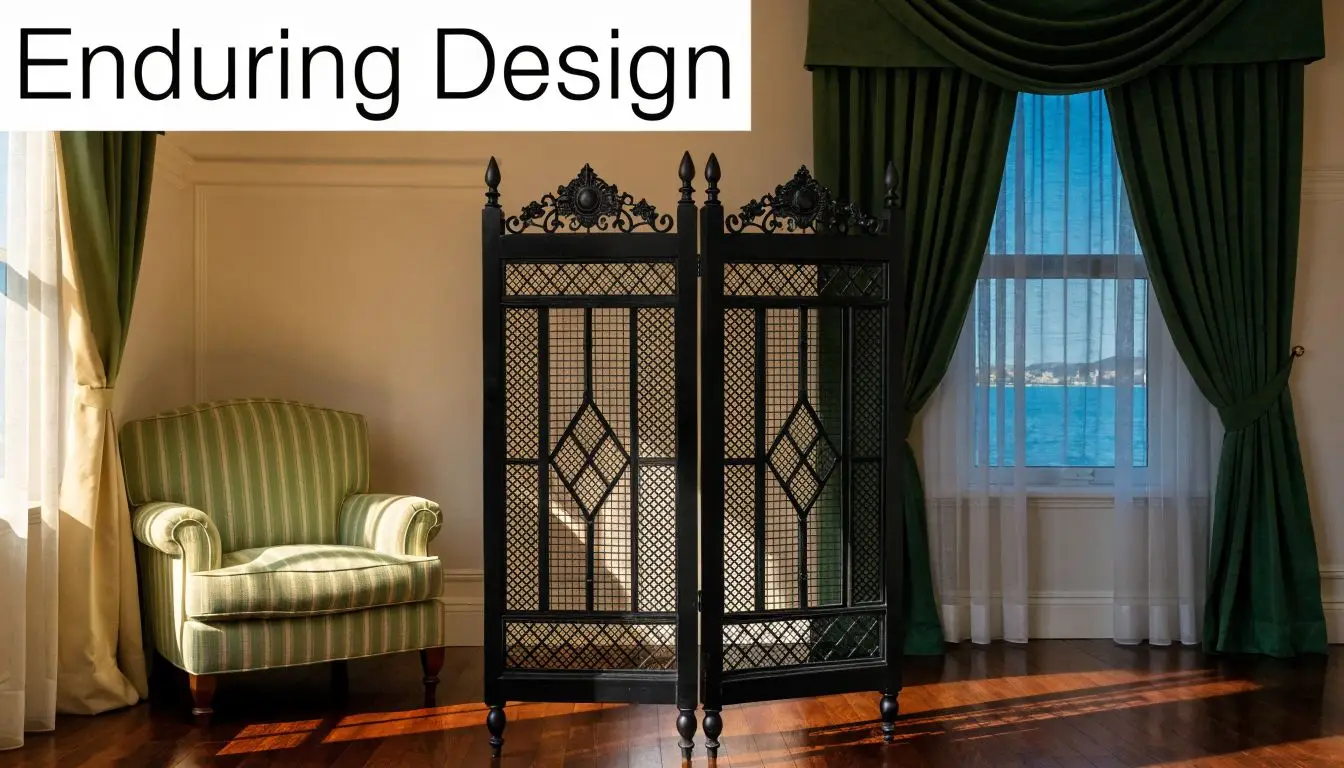
That heritage matters because it explains why the piece still works so naturally in today’s homes. The divider was never just decoration. From the beginning, it helped people shape space, manage comfort, and add beauty at the same time.
Why two panels feel different
A multi-panel screen can become a major visual feature. Sometimes that’s exactly right. But in a smaller living room, apartment, or bedroom, more panels can quickly feel heavy.
Two panels do something subtler. They suggest a boundary rather than building one outright. That makes them especially effective when you want:
- A lighter footprint in a compact room
- Easier repositioning from one corner to another
- Simpler storage when the divider isn’t needed every day
- A cleaner silhouette that won’t overwhelm nearby furniture
The beauty of the format is its restraint. You get privacy where you need it, but you don’t create a maze.
A smart choice, not a compromise
People sometimes assume a smaller divider is just the budget version of a larger screen. In practice, that isn’t the right way to think about it. A two-panel divider is often the better design choice when circulation, sightlines, and flexibility matter more than maximum coverage.
In a compact room, the best divider is often the one that creates order without announcing itself from every angle.
That’s why two-panel designs fit so naturally beside an accent chair, at the end of a bed, or near a writing desk. They can define a moment within the room instead of taking over the entire room. For modern homes, especially those where every square foot has to work hard, that balance is hard to beat.
Find Your Perfect Match in Material and Style
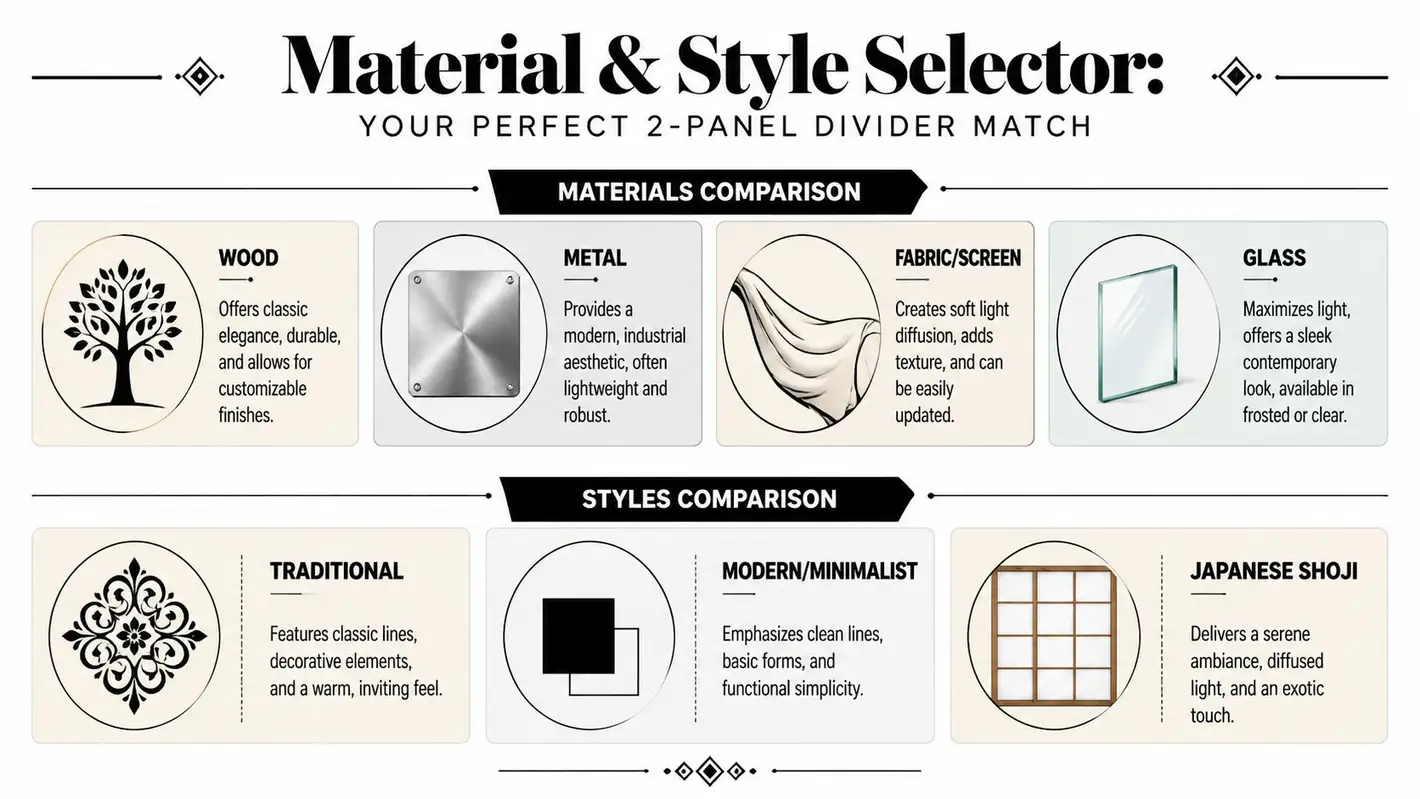
Material changes everything. Two dividers can be the same size and shape yet feel completely different once you place them in a room. One adds warmth. Another sharpens the room’s lines. Another softens the light and makes a bedroom feel quieter.
How materials change the feel of the room
Here’s the trade-off most shoppers are really weighing.
| Material | What it does well | Best fit |
|---|---|---|
| Wood | Brings visual warmth and a furniture-like presence | Traditional rooms, rustic spaces, classic bedrooms, dining areas |
| Metal | Feels crisp and architectural | Modern apartments, industrial spaces, minimalist interiors |
| Fabric or screen-style panels | Softens the room and diffuses light | Bedrooms, reading corners, casual living rooms |
| Glass or glass-look panels | Keeps the room open and bright | Contemporary rooms that need separation without heaviness |
| Shoji-inspired designs | Creates a calm, filtered look | Serene bedrooms, meditation corners, pared-back interiors |
Wood tends to pair easily with substantial furniture. If your room already has a grounded look with a solid dining table, a bookcase, or a traditional bedroom set, a wooden divider usually feels intentional. Fabric works differently. It reads lighter and can blend beautifully with upholstered seating, layered rugs, and softer color palettes.
What works for real life
Looks matter, but daily use matters more. A divider in a formal guest room has a different job than one in a busy family space.
- For homes with children or pets, sturdier frames and easy-clean surfaces usually hold up better than delicate paper-like inserts.
- For bedrooms, softer materials often create the gentlest visual break.
- For work-from-home corners, more substantial panel construction can feel more stable and purposeful.
- For renters, lighter designs are easier to move and store.
Professional-grade dividers often use a 1/2" closed-cell honeycomb core wrapped in fabric or vinyl, which gives the panel rigidity and sound-absorbing qualities that simple decorative screens usually don’t match, according to these panel construction specifications.
That detail is worth paying attention to. A divider that only looks good in a product photo can disappoint quickly if it wobbles, sags, or feels flimsy after a few moves.
Matching style to the rest of your furniture
A room divider should relate to the furniture around it, not look like an afterthought.
- Traditional interiors benefit from wood tones, framed panels, and richer finishes.
- Modern rooms often look best with clean lines and restrained color.
- Layered, cozy spaces welcome woven textures or fabric surfaces.
- Calm, minimal bedrooms pair naturally with Shoji-inspired forms.
If your room feels flat, color can do as much as shape. A divider can become the accent that breaks up a field of beige, gray, or wood tones, especially if you coordinate it with pillows, wall art, or a rug. For ideas that help tie those pieces together, this guide on adding color to a room offers practical direction.
Buy for the life you live, not the showroom you admire. The right divider should suit your habits as much as your style.
Clever Styling for Small and Open Spaces
The most underrated strength of a 2 panel room divider is that it can improve a room without taking over the floor plan. That matters in homes where every path through the room already does double duty.
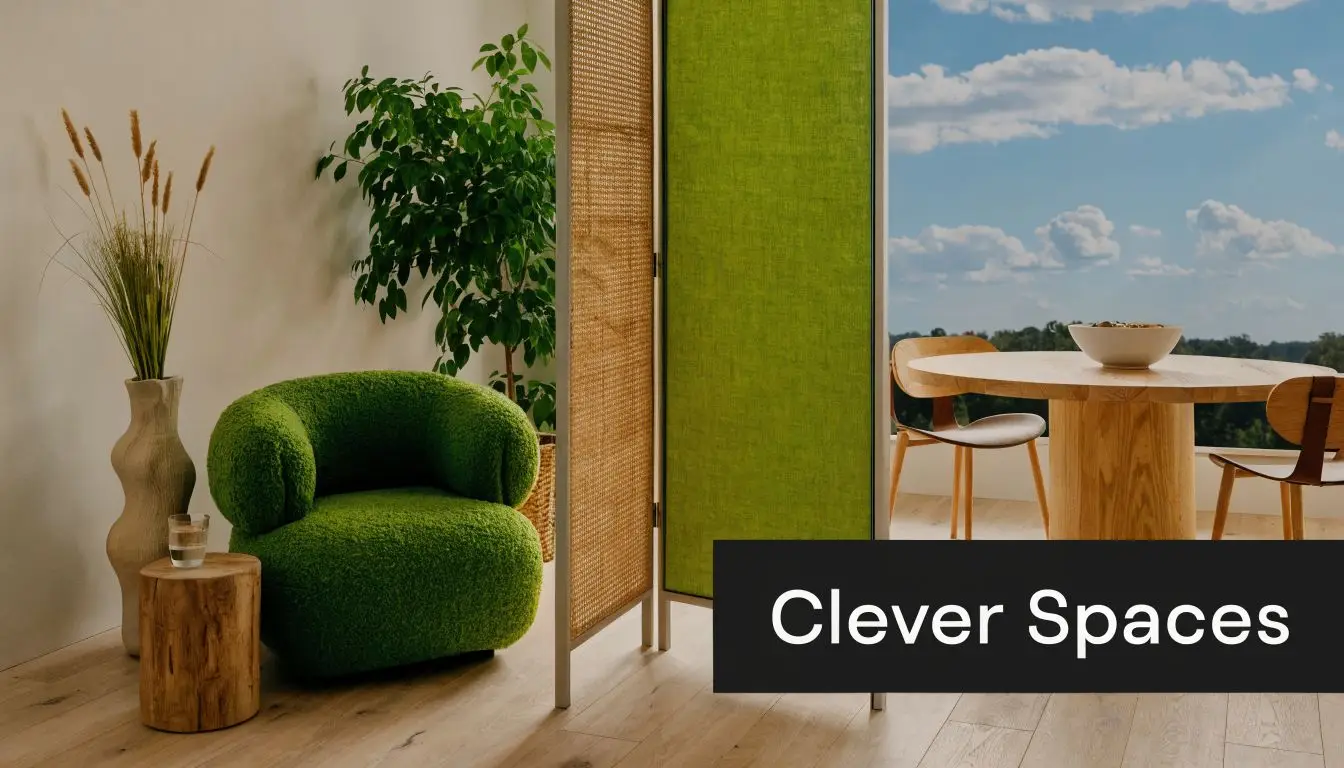
A divider works best when it supports movement, not when it interrupts it. To keep a room comfortable, multifunctional furniture should preserve at least 70 cm (28 inches) of clear walking space, as noted in this compact-living guidance on circulation.
The home office corner
This is one of the most practical uses. Place the divider behind or slightly beside a compact desk so the work zone feels distinct from the rest of the living area. You don’t need to block the whole desk. Just enough screening to stop the eye from landing on cables, paperwork, or a task chair once the workday ends.
The best arrangement leaves the walking route open on one side. If the divider juts directly into the room’s main pathway, it creates daily friction. If it tucks into a corner and frames the desk, it feels natural.
The studio apartment sleeper zone
In a studio, a two-panel screen can create visual privacy at the foot or side of the bed. This works especially well when the goal isn’t full separation, but a cleaner transition between sleeping and living.
Try these placement ideas:
- At the bed corner to hide bedding from the sitting area
- Near the entry view so guests don’t immediately look into the sleeping zone
- Beside a small dresser or clothing rack to create a dressing spot
The common mistake is trying to force two panels to do the work of a full wall. They don’t need to. Their strength is selective screening.
The soft entry in an open room
Many apartments and open layouts lack a real foyer. A 2 panel room divider can create one. Set it near the entry with a narrow console, bench, or mirror nearby, and the room instantly feels more organized.
For rooms that need better zoning overall, these open floor plan furniture arrangement ideas can help you think through placement before you buy anything new.
A divider should redirect attention, not stop traffic.
Styling moves that make a small divider look intentional
A two-panel screen looks strongest when it has company. On its own, it can appear temporary. When paired with nearby furniture, it becomes part of a composition.
Use it with:
- An accent chair and lamp for a reading corner
- A console and artwork for a defined entry moment
- A vanity stool and mirror in a bedroom dressing area
- A small dining table nearby to separate eating from lounging in a mixed-use room
Keep the angle slightly open rather than fully flat when possible. A little depth gives the divider presence and often improves stability.
Measure Twice A Practical Guide
Buying the right divider starts with measuring the room the way you use it. Not the empty room. The lived-in room.

Standard 2 panel room dividers often have panels around 22 to 24 inches wide and 71 to 73 inches tall, for a total span of 44 to 48 inches, according to these standard divider dimensions. That size is well suited to partitioning a corner or a smaller section of a room.
Start with these three measurements
Most mistakes happen because shoppers measure only the wall and forget the room’s traffic pattern.
Measure the span you want to screen
Check the width of the area you want to visually separate. In many homes, the divider only needs to shield part of the view, not the entire zone.Measure the walking path
Confirm that people can still move comfortably around the divider once it’s open and angled.Measure nearby furniture depth
A divider beside a desk, bed, nightstand, or accent chair needs breathing room. Tight fits usually look accidental.
What the common sizes mean in practice
A two-panel divider with a total span in the 44 to 48 inch range is often enough for:
- One corner of a bedroom
- The side of a desk setup
- A partial screen near a bed
- A small entry definition zone
The height matters too. A divider in the 71 to 73 inch range provides strong visual separation without feeling as imposing as a built-in partition.
A simple fitting checklist
Before you order, check each point:
- Sightline check. Stand at the room’s entry and see what you want the divider to hide or soften.
- Door swing check. Make sure doors, drawers, and closet access still work normally.
- Storage check. If you plan to fold it away at times, identify where it will go.
- Angle check. Two-panel dividers often look and perform better slightly angled than stretched straight.
If you want a refresher on measuring furniture in tighter layouts, this room-by-room measuring guide is a useful place to start.
A divider is one of the easier furnishings to buy, but it still rewards careful measuring. A few minutes with a tape measure can save you from a piece that feels too short, too tall, or awkwardly placed once it arrives.
Caring For Your Divider and Final Considerations
A room divider doesn’t ask for much maintenance, but the right care keeps it looking intentional instead of tired. Dust wood frames regularly, clean fabric or vinyl surfaces according to the material’s needs, and avoid dragging the piece across the floor when moving it. Hinges last longer when the divider is folded and opened smoothly rather than forced flat.
Wooden styles benefit from the same kind of protection as other case goods and accent pieces. If your divider has a stained or painted wood frame, this guide to protecting wood furniture from scratches and stains offers practical upkeep habits that apply here too.
What a 2 panel room divider does well
A good two-panel divider offers several real advantages:
- Visual privacy without permanent construction
- Flexible placement in bedrooms, studios, and open living spaces
- Easy seasonal use, since it can move as your needs change
- A decorative layer that can make a room feel finished
What it won’t do
It’s better to be plain about the limits. Most lightweight two-panel dividers provide only minimal sound reduction. Some higher-end acoustic models can reduce mid-range speech by 5 to 10 dB, which can offer a slight improvement for call privacy, according to this acoustic divider product information. That’s helpful, but it isn’t soundproofing.
If noise control is your main goal, think of a divider as a modest assist, not a substitute for a door or a wall.
Stability is the other consideration. Very light screens are easy to move, but they can also feel less anchored in busy households. In homes with active children, pets, or constant rearranging, sturdier construction is usually worth it.
Bring Home Heritage and Style with Short Furniture
A well-chosen 2 panel room divider can do more than fill a corner. It can give a room structure, calm visual clutter, and help one space serve several purposes without feeling crowded. That’s why it remains such a useful piece for modern living, especially in smaller homes and flexible rooms.
At Short Furniture, that practical approach to home design has guided our family business since 1870. Customers across Illinois count on us for furniture that looks good, lives well, and arrives with the kind of service that makes online shopping feel easier. Whether you’re refreshing a studio, updating a guest room, or pairing a divider with new living room seating, a dining table, bedroom furniture, home office pieces, or a mattress, we’re here to help you find a stylish, affordable fit.
You’ll also find the extras that make a purchase more comfortable. Flexible financing options help you furnish now and pay over time. Reliable delivery keeps your project moving. Complimentary design consultations give you a second opinion when you’re trying to get the scale, finish, or layout right.
If you’re ready to define your space with more confidence, shop the collection, browse our latest arrivals online, and apply for financing today. Short Furniture brings together heritage, convenience, and dependable value so your home can work better and feel more like yours.
Browse Short Furniture to shop room dividers, living room sets, dining tables, mattresses, bedroom furniture, and home accents designed for real homes across Illinois. If you’d like help narrowing down the right look, request a complimentary design consultation, explore flexible financing options, and count on reliable delivery that makes upgrading your space simple.