


Desk With Hidden Compartments: A Buyer’s Guide

You sit down to work, and the desk is already full. Mail is stacked near the laptop. Charging cords snake across the top. A password notebook, a checkbook, and a couple of documents you’d rather not leave out are all within sight.
That kind of clutter does more than make a room look messy. It makes a home office feel unsettled. Even in a beautiful room, a crowded desk can leave you feeling like nothing has a proper place.
A desk with hidden compartments solves a very specific modern problem. It gives you a clean surface for daily work while keeping private items close at hand but out of view. That balance is what makes these desks so appealing. They aren’t gimmicks. They’re thoughtful furniture.
Families have wanted that mix of beauty, order, and privacy for a long time. The difference today is where the desk lives. It might sit in a dedicated office, the corner of a bedroom, or along a living room wall beside a sofa and a media console. In each case, the desk has to work harder. It has to look polished, store more, and help the room stay calm.
An Elegant Solution to Modern Clutter and Privacy
A lot of readers are in the same situation. The desk started as a simple work surface. Then life moved in.
First came the laptop and printer. Then school papers, bills, earbuds, charging cables, sticky notes, reading glasses, and a few personal items you didn’t want sitting in the open. Before long, the desk became both storage zone and stress point.
A hidden-compartment desk changes that experience in a quiet way. Instead of adding another organizer on top, it builds storage into the furniture itself. The room looks cleaner because the solution isn’t piled on the surface.
Why this matters in everyday life
Privacy is part of the appeal, but not always in the dramatic sense people imagine. Most homeowners aren’t looking for a spy desk. They want a practical place to tuck away passports, financial papers, spare cash, backup drives, or medication from plain sight.
Just as often, they want a better way to end the workday.
A parent using a desk in the dining area may want to close the laptop, slide away the to-do list, and make the space feel like home again. An empty nester may want a handsome writing desk that manages paperwork without looking utilitarian. A renter may need one piece that acts as office, organizer, and decorative anchor all at once.
A good desk should do two jobs at once. It should support your work while protecting the look and feel of the room around it.
The real value of concealed storage
A desk with hidden compartments helps with:
- Visual calm by keeping papers and small essentials out of sight
- Everyday privacy for items you don’t want left in the open
- Better use of space when the desk sits in a shared room
- A more finished look that feels like furniture, not office equipment
That’s why this style has lasting appeal. It respects both how people live and how they want their homes to feel.
What Are Desks With Hidden Compartments
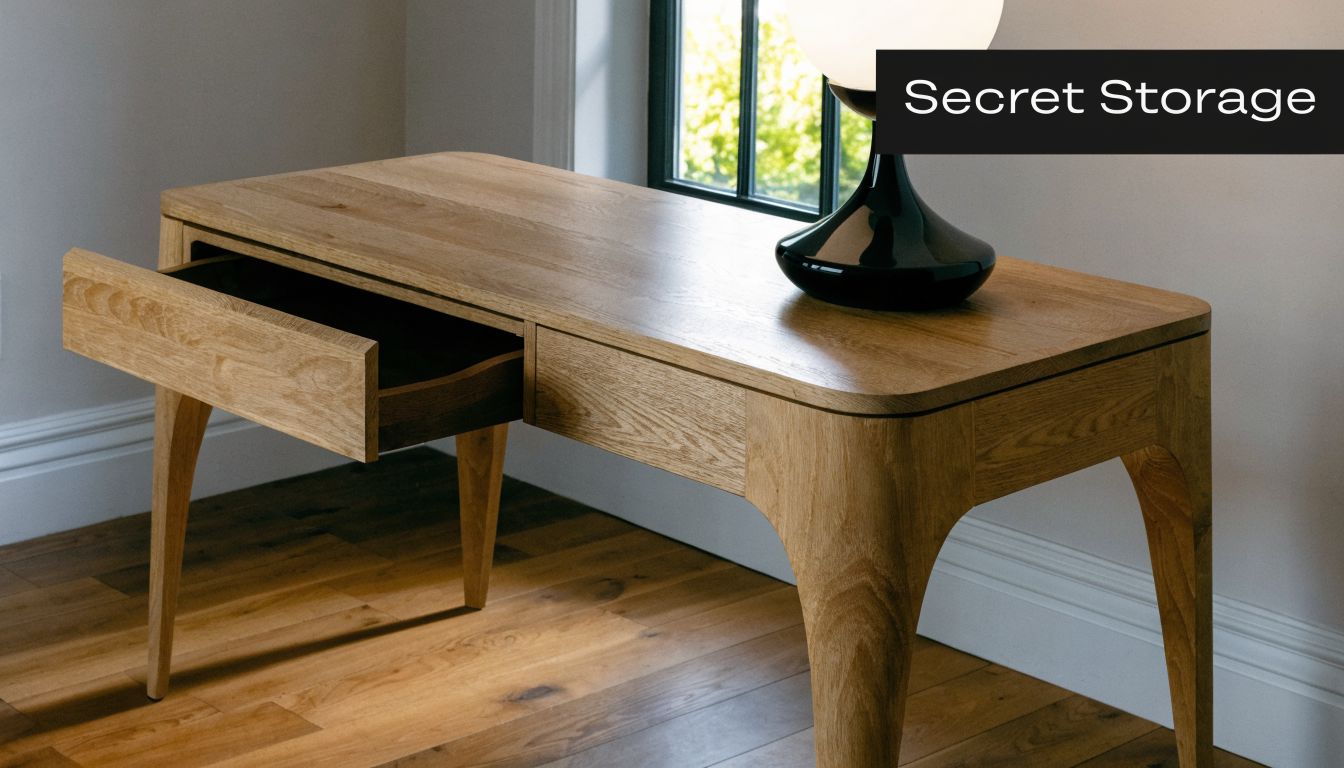
At the simplest level, a desk with hidden compartments is a desk that includes storage spaces not immediately visible to the eye. Some are tucked behind false drawer bottoms. Others sit behind panels, spring mechanisms, or concealed releases.
The purpose is straightforward. You keep certain items close by without displaying them.
A tradition with deep roots
This idea isn’t new. In the 18th century, desks with hidden compartments became a hallmark of luxury furniture in Europe and colonial America, designed to protect valuables and documents. Historians estimate that up to 20 to 30% of high-end slant-front desks from that period included these features, and cabinetmakers such as the Roentgen brothers became known for intricate secret-drawer designs, as noted in this history of secret drawers.
That history matters because it clears up a common misunderstanding. Hidden storage wasn’t added as a novelty. It was part of fine furniture making. Craftsmen built it in because clients wanted furniture that combined elegance with discretion.
How to think about them today
Modern buyers usually fall into one of three groups.
Some want decluttering help. They need a place for cables, notes, chargers, and the little items that collect around a work surface.
Others want private storage. They may need room for documents, jewelry, or small valuables that shouldn’t sit in a standard open drawer.
A third group wants multi-purpose furniture. They’re furnishing a room that serves more than one role, so the desk has to feel refined enough to blend with bookcases, accent chairs, or even bedroom furniture.
Practical rule: If you want the desk to disappear into the room visually, choose a design where the hidden feature looks like part of the normal casework rather than an obvious add-on.
What hidden compartments are not
They’re not a replacement for every type of secure storage. They’re best understood as concealed, integrated storage within fine furniture.
That distinction helps buyers choose well. If your main goal is tidiness and everyday privacy, a hidden-compartment desk can be a smart fit. If you want a desk that also brings character to the room, it’s an even better one.
Exploring Common Types and Mechanisms
The mechanism is where many shoppers get stuck. They like the idea of concealed storage, but they’re not sure what kind of opening system makes sense for daily use.
The easiest way to decide is to match the mechanism to the item you plan to store and how often you’ll need access.
Simple concealment options
Some desks use very subtle built-in features that are easy to live with.
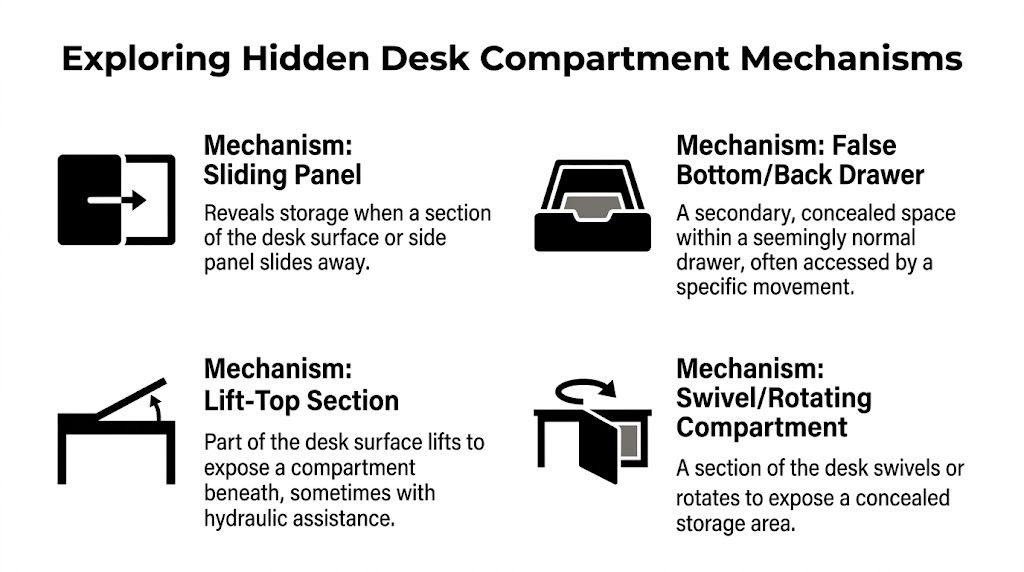
A false bottom drawer creates a concealed layer beneath the visible drawer floor. This works well for flat items like papers, envelopes, or emergency cash.
A sliding panel moves aside to reveal a hidden pocket. This type often appeals to buyers who like classic furniture details and want the compartment fully disguised.
A lift-top section raises part of the top or writing surface to reveal storage underneath. This can be convenient if you need quick access to everyday tools.
A swivel or rotating compartment uses a moving section of the desk to expose a hidden space. These tend to feel more architectural and work well in larger desks.
More secure modern mechanisms
Some concealment desks go further. Modern versions often use false-bottom drawers and spring-loaded panels, secured with high-power magnetic locks disguised as decor. These are designed for “security through obscurity” and are benchmarked to prevent discovery in 95% of casual inspection scenarios, with optional RFID or biometric upgrades available in some designs, according to this overview of modern concealment desk mechanisms.
That’s useful because it tells you where these desks shine. They aren’t about visible lockboxes. They’re about keeping the compartment unnoticed in the first place.
If you need fast access, simpler is usually better. If you want the compartment to stay unnoticed, a magnetic release or concealed panel often makes more sense.
Comparing Hidden Compartment Mechanisms
| Mechanism Type | How It Works | Best For | Security Level |
|---|---|---|---|
| False bottom or back drawer | Creates a concealed layer inside a standard drawer | Documents, slim valuables, backup cash | Moderate concealment |
| Spring-loaded panel | Opens when a hidden pressure point or release is used | Small items you want nearby but out of sight | Moderate concealment |
| Magnetic lock | Opens only when a magnet is placed in the correct spot | Private storage with a cleaner exterior | Higher concealment |
| RFID or biometric upgrade | Uses electronic access for release | Buyers who want added access control | Higher security focus |
| Sliding or rotating panel | Moves part of the desk structure to reveal storage | Design-forward desks with integrated hidden space | Varies by design |
How to choose the right mechanism
Choose by use case, not by novelty.
- For papers and passports choose a false-bottom drawer or concealed inner compartment.
- For frequent access look for a tip-out, lift-top, or easy spring-loaded release.
- For a cleaner exterior magnetic access avoids visible locks.
- For a multi-function workspace look at desks that combine visible storage with one concealed area.
If you prefer a desk that already blends clever function with a versatile layout, a swivel lift-top L-desk can be a helpful style reference as you compare options.
Key Features and Materials to Evaluate Before You Buy
A hidden compartment is only as good as the desk built around it. That’s the part many buyers miss.
They focus on the reveal, the secret panel, or the clever lock. But if the desk itself is light, poorly fitted, or finished with weak hardware, the feature won’t feel satisfying for long.
Start with the structure
Look first at the desk as furniture.
Check the drawer action. Open and close each section slowly. The movement should feel controlled, not loose or jerky. Pay attention to joinery, panel alignment, and whether the case feels steady when you rest your hands on the top.
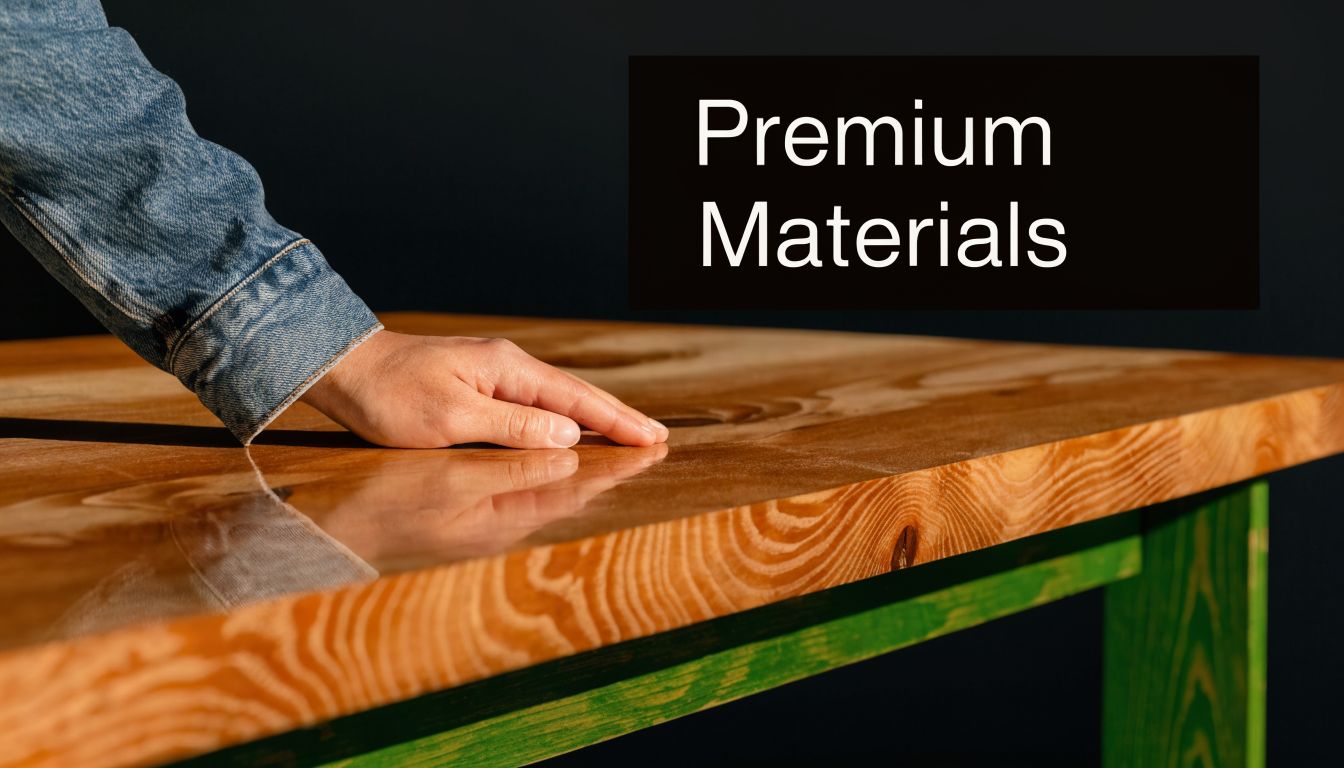
Wood choice matters too. Solid wood gives a desk a different feel than lighter engineered construction. It tends to provide better long-term stability for moving parts, especially in a piece that may be opened and closed daily.
Ask about the mechanism, not just the finish
Smart buyers distinguish between appearance and performance by considering a critical but often overlooked issue: the long-term durability of the mechanism itself. Buyers should ask whether magnetic catches, mechanical locks, or spring mechanisms will hold up after years of daily use and what maintenance they may require, as discussed in this guide on hidden compartment desk durability.
That question is worth asking plainly: What happens after years of use?
A hidden compartment that sticks, drifts out of alignment, or needs excessive force stops being clever. It becomes annoying.
What to inspect before you commit
- Material integrity. Look for substantial construction and a top that feels stable under normal use.
- Hardware quality. Hinges, runners, and catches should operate smoothly.
- Panel alignment. Hidden sections should sit flush when closed.
- Access comfort. You shouldn’t need awkward hand positions to open the compartment.
- Finish consistency. Uneven stain or rough edges can signal shortcuts elsewhere.
Buying advice: Don’t ask only, “Where is the hidden compartment?” Ask, “Will this mechanism still feel smooth years from now?”
Style still matters
A desk with hidden compartments should still suit the room. Some buyers want a traditional writing desk in oak or cherry tones. Others prefer a cleaner transitional style that pairs easily with upholstered beds, dining tables, or living room sets nearby.
If you’re weighing broader layout and function at the same time, this guide to multifunctional home office furniture can help you compare hidden storage with other space-saving features.
The best choice is the desk that still feels handsome even if nobody ever discovers its secret.
Sizing and Placing Your New Desk
A beautiful desk can still feel wrong if it’s too large for the room or awkward in daily use. Placement matters more than many people expect.
A desk with hidden compartments often needs a little extra thought because access points may open from the front, side, or top. You want enough room to use the desk comfortably without blocking walkways or crowding nearby furniture.
Measure for movement, not just footprint
Many shoppers measure the wall and stop there. That’s only the first step.
You also need space for the chair to pull back, for drawers to open, and for your body to move naturally while working. If the desk has a side panel or lift-top feature, leave room for that action too.
If you’re not confident in your room measurements, a practical starting point is this furniture measuring guide.
Placement ideas by room type
A dedicated home office gives you the most freedom. You can float the desk, center it on a wall, or pair it with bookcases and file storage.
In a bedroom, a desk usually works best when it feels quiet and intentional. Choose a spot with natural light if possible, and keep the styling restrained so the room still reads as restful.
In a living room or shared area, the desk should act like furniture first. A slimmer profile, cleaner lines, and concealed storage help it blend with side tables, lamps, and accent seating.
Why placement affects productivity
Organized desks can improve workflow in a measurable way. User tests found that tip-out trays and concealed storage can reduce surface clutter by 40% and lead to productivity gains of up to 25% by reducing time spent searching for items, according to these hidden storage user tests.
That doesn’t mean every desk will transform your workday on its own. It does mean layout and storage work together. If the desk is placed where you can use it comfortably, the concealed storage becomes part of a smoother routine.
Keep the items you use daily in the easiest-access spot. Reserve the most concealed compartment for things you want nearby but not visible.
A quick placement checklist
- Check traffic flow so people can pass without bumping the chair
- Test drawer clearance before placing the desk near a bed or wall
- Use light wisely by positioning the desk near a window or lamp source
- Think about end-of-day appearance if the desk sits in a shared room
A desk should fit the room with the same ease as any other major piece.
Styling Ideas for Every Illinois Home
The best styling choices come from how the desk will serve the household. The same hidden-compartment desk can feel completely different in three homes.
For the new homeowner
A first home often comes with paperwork, moving lists, warranty folders, and a hundred little tasks that need a place to land. A desk with hidden compartments can become the household command center without making the room feel like an office.
Choose a desk with a warm wood finish and pair it with a comfortable upholstered chair, a small lamp, and one framed piece of art. Keep the top mostly open. Let the hidden storage handle the papers and practical items. The room will feel settled faster.
For the empty nester
Many empty nesters want furniture that feels more personal and less purely functional. The desk may be used for correspondence, hobbies, estate planning, or managing household records.
A classic writing desk shines. Set it with a tray for letters, a ceramic bowl, and a reading lamp with character. The concealed space can hold the private paperwork you don’t want visible. The desk becomes part of the room’s charm, not just a work station.
A well-styled desk shouldn’t look busy. It should look ready.
For the renter or room refresher
When space is limited, each piece has to earn its place. A desk with hidden compartments works well in an apartment bedroom, hallway nook, or living room edge because it reduces the need for extra storage pieces.
Keep the palette simple. A mirror above the desk can help the area feel larger. A narrow desk lamp, one plant, and a small basket nearby are often enough. Hidden storage does the heavy lifting while the desk keeps a clean outline.
For more ideas on creating a workspace that feels polished instead of improvised, this article on creating an inspiring home office is a useful next read.
A few pairings that work well
- Traditional desk with a patterned rug and well-proportioned armchair
- Transitional desk with soft neutral drapery and a sleek lamp
- Compact writing desk with a floating shelf above for vertical balance
- Desk in a bedroom with matching tones drawn from the bed and nightstands
The smartest styling choice is restraint. Let the desk’s craftsmanship and concealed function do part of the talking.
Your Home Office Partner Since 1870
A good hidden-compartment desk earns its keep every day. In the morning, it gives you a calm place to work. By evening, it helps the room look orderly again, with private papers, chargers, and small valuables tucked out of sight instead of spread across the surface.
That balance is what has kept this style relevant for so long. A well-made desk with concealed storage works like a finely fitted coat. It handles a practical job, but it also brings polish to the room around it. In a modern home, that matters. Many Illinois families need one piece that supports work, protects privacy, and still feels timeless enough to live comfortably beside older wood furniture, newer upholstery, or a mix of both.
As you compare options, keep your attention on a few basics. The hiding place should be easy for you to use, not fussy or awkward. The wood, joinery, and hardware should feel solid in the hand. The size should fit the room the way a good area rug fits a floor. Large enough to do its job, but not so large that everything else has to work around it.
Those are the same standards we have believed in for generations. A family furniture business does not last by chasing short-lived trends. It lasts by helping neighbors choose pieces that suit real homes, real budgets, and daily routines. That kind of guidance still matters, whether you are furnishing one quiet corner for remote work or updating several rooms at once.
Short Furniture has served Illinois homes since 1870, and that history means something simple. We know furniture has to do more than look good on a sales floor. It has to arrive well, fit the way you hoped, and keep serving your household for years. For a desk with hidden compartments, that trust matters because the best choice is rarely the flashiest one. It is the one that feels right every time you sit down.
Browse Short Furniture to shop home office desks, living room furniture, dining sets, mattresses, and more from a family-owned Illinois retailer serving customers since 1870. If you’re ready to furnish your space with confidence, browse the latest arrivals online, ask about complimentary design consultations, enjoy reliable delivery, and apply for financing today to bring home the right piece sooner.