


Deck Decorating Ideas: Create Your Dream Outdoor Oasis

Step out the back door on a mild evening and the difference is obvious. A bare deck feels temporary. A well-furnished deck feels like part of the home, with a place to sit, set down a drink, share a meal, and stay awhile.
That shift matters. The best decks are not decorated as separate outdoor projects. They are furnished as outdoor rooms that extend the comfort, function, and style of the spaces just inside the door.
At Short Furniture, our family has helped Illinois households furnish their homes since 1870, and the same principles hold up outside. Good deck design starts with how the space needs to work day to day. Morning coffee, weeknight dinners, quiet reading time, bigger family gatherings. Once those uses are clear, furniture and decor stop feeling random and start solving problems.
A deck that feels too open can gain structure. One that feels cramped can work better with the right scale. One that sits hot in the afternoon can become far more comfortable with shade, textiles, and layout changes. We see those trade-offs every season, and small decisions usually make the biggest difference.
If you are planning a refresh, start by treating the deck with the same care you would give a living room or dining room. Use pieces that fit the footprint, finishes that connect to the house, and arrangements that support how you spend time outside. If you need ideas for layouts that break away from the usual setup, our guide to furniture arrangements that work wonders is a practical place to start.
The ideas below focus on comfort, function, and a pulled-together look, so your deck feels finished, useful, and welcoming from the first warm day of the season.
1. Define Zones with Thoughtful Furniture Arrangements
Step out onto a deck that has one oversized seating set dropped in the middle, and the whole space feels undecided. Step onto one with a clear place to dine, a comfortable spot to sit, and room to move between them, and it reads like part of the home.
That shift matters. A deck works best as an outdoor room, not a leftover platform behind the house.
Start by choosing the activity that earns the most square footage. For some households, that is dining. For others, it is lounging after work, watching the kids in the yard, or gathering around a fire feature on cool evenings. Once the primary use is set, the rest of the layout gets easier because every other piece supports that main function instead of competing with it.
On a smaller deck, restraint usually beats ambition. A loveseat with two chairs often serves the space better than a sectional that crowds the doorway. On a larger deck, separate groupings can make the footprint feel more welcoming and less exposed. The trade-off is simple. More furniture does not always mean more function. It often means tighter walkways, harder cleaning, and a layout that feels cramped.
A practical setup might look like this:
- Lounge zone: An all-weather wicker sofa or loveseat, two chairs, and a coffee table
- Dining zone: A round table with cushioned chairs to keep traffic flow easier
- View zone: Two swivel or deep-seat chairs angled toward the yard
- Fire feature zone: Bench or club seating arranged to encourage conversation
Good zoning depends on spacing as much as furniture choice. Leave enough room to pull out dining chairs comfortably. Keep the path from the door to the stairs clear. Set the grill where the cook can work without cutting through the seating area. An outdoor rug helps define the main seating group, especially when the deck needs structure but you do not want to add walls or built-ins.
I have seen many decks improve with fewer pieces, not more.
If the layout still feels tricky, start with one anchor group and build outward. These uncommon furniture arrangements that solve awkward traffic flow can help you see options you may not have considered. A good plan on paper usually saves money, frustration, and one expensive piece that looked right in the showroom but never fit the deck.
2. Layer Lighting for Warmth and Ambiance
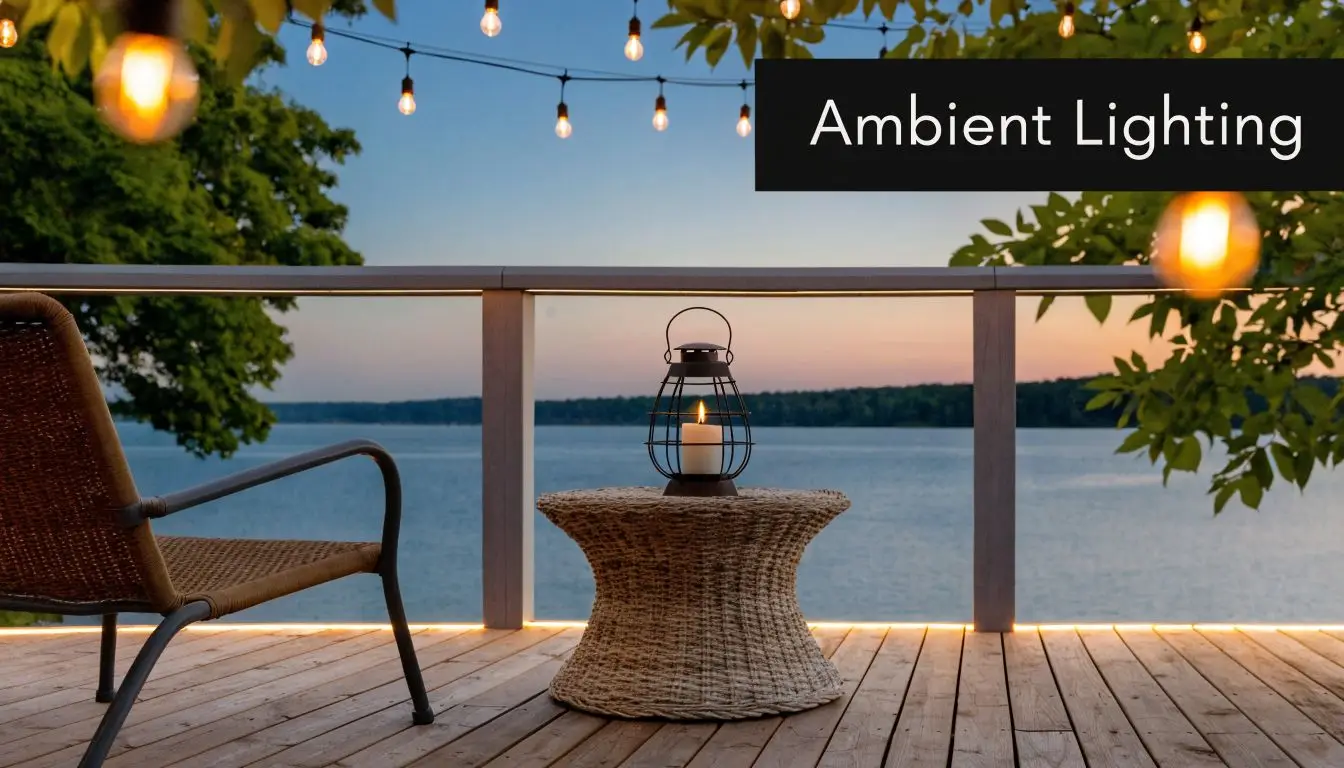
A deck often looks finished in daylight and falls flat after sunset. Good lighting fixes that fast. It extends dinner, makes conversation areas feel settled, and turns the deck into an outdoor room instead of a dark platform outside the back door.
LED fixtures are usually the practical choice for outdoor use because they stay cooler, need less maintenance, and come in styles that work across the whole space, from string lights to step lights and lanterns. One bright fixture over the door rarely does enough on its own.
Use three kinds of light
Apply the same principles as indoor lighting. Ambient, task, and accent lighting each solve a different problem.
- Ambient light: Bistro string lights overhead or along a pergola
- Task light: Wall sconces near a grill, outdoor kitchen, or dining table
- Accent light: Lanterns on side tables, uplighting on planters, or low deck-edge lights
Warm white bulbs are usually the safest choice. They flatter wood tones, soften metal finishes, and help the deck feel connected to the rest of the home.
On smaller decks, restraint matters. A few focused light sources usually work better than flooding the whole area with brightness, which can make furniture look flat and leave the space feeling exposed. On larger decks, spread the light in layers so guests are not pulled toward one overly bright corner while the rest of the deck disappears.
The common mistake
Homeowners often start with one strand of lights and stop there. The look is pleasant, but the deck still lacks light where people spend time, around stairs, serving areas, and seating.
Add a lantern on the coffee table. Place a rechargeable lamp beside a lounge chair. Use low lighting at the perimeter so the edge of the deck is easy to read at night. That mix feels intentional and makes the space work better.
Indoor lighting habits carry over outdoors more than people expect. This guide to putting your living room in the best light offers useful ideas for balancing mood and function. Browse our latest home decor accents online if you want lanterns and candle holders that make the deck feel furnished, not improvised.
3. Add Privacy with Screens and Vertical Elements
A deck rarely feels relaxing when you feel exposed. If neighboring windows look straight in, the space won't function like an outdoor room no matter how nice the furniture is.
Vertical elements fix that. Privacy screens, lattice panels, planters with height, and pergola drapery all create a softer edge and make seating areas feel intentional.
Choose the right type of privacy
Different decks need different solutions.
A modern home often looks best with black metal screens or slatted panels. A traditional exterior can handle painted lattice or wood framing with climbing plants. If you rent or don't want permanent construction, tall planters and freestanding screens give you flexibility without major installation.
Good placement matters more than total enclosure. You don't need to wall off the whole deck. Block the one bad sightline, or the side that gets the strongest sun, and the space usually improves fast.
Privacy should feel selective, not boxed in.
Layer hard and soft elements
The best results usually mix structure and planting. A solid panel gives coverage right away. Pots filled with geraniums or lantana soften the edge and keep the setup from feeling too rigid.
This is also where scale matters. On a small deck, one oversized privacy wall can feel heavy. Two narrower screens with a gap between them often look better and still do the job.
Keep these trade-offs in mind:
- Permanent screens: Better coverage, more work, less flexibility
- Freestanding screens: Easier to move, less stable in wind
- Living walls: Beautiful and soft, but they need regular watering and seasonal attention
- Pergola curtains or fabric panels: Great for adaptable privacy, but they need secure tie-backs and weather-aware care
Check local code or HOA rules before adding fixed structures. If you're buying furniture and privacy pieces at the same time, our design team can help you make sure the proportions work together instead of competing.
4. Unify the Look with a Cohesive Color Palette
A deck starts to feel like an outdoor room when the colors relate to each other. Without that connection, even good furniture can look pieced together.
Start with the surfaces that are already part of the house. Siding, trim, decking, the door color, and even nearby stone or brick should guide the rest of the choices. That approach makes the deck feel connected to the home instead of decorated as a separate zone.
Warm exteriors usually pair well with teak, brown wicker, terracotta, olive, sand, and cream. Cooler exteriors often look better with charcoal, black, white, weathered gray, and muted blue. The goal is not a perfect match. The goal is a palette that feels settled and intentional.
A simple way to keep that balance is the 60-30-10 rule:
- 60% dominant tone: the fixed backdrop, such as siding, decking, or railing
- 30% secondary tone: the largest furniture finish or main cushion color
- 10% accent tone: pillows, planters, lanterns, and tabletop pieces
This is one of the easiest places to avoid an expensive mistake. Bold color on a pillow is easy to swap. Bold color on a sofa frame or full cushion set is a longer commitment, and it can limit what you add later.
For that reason, neutral frames and main cushions usually give you more flexibility. Use pattern and stronger color in the accents. If the deck gets strong afternoon sun, lighter fabrics also tend to feel more comfortable to the touch than very dark ones.
If you're trying to connect indoor and outdoor spaces, this expert guide to the perfect color palette is a useful place to start. It can help you choose shades that make your deck feel like a natural extension of the rooms just inside the door.
5. Soften the Space with Outdoor Textiles
Without textiles, most decks feel hard. You notice the boards underfoot, the angles of the furniture, and every surface that feels more practical than inviting.
Textiles fix that quickly. A rug under the seating group, supportive cushions on dining chairs, and a few throw pillows on a sofa can make the deck feel like a real extension of the living room.
Start with the rug
If you only add one soft layer, make it the rug. It visually anchors the furniture and tells everyone where the room begins.
A large striped rug under a conversation set works well on classic decks. A subtle geometric pattern fits more modern spaces. If your furniture already has a lot of texture, keep the rug quieter. If the furniture is simple, the rug can do more decorative work.
After that, add cushions where people spend the most time. Deep-seat lounge furniture should feel plush enough for an evening. Dining chairs need enough padding that guests don't start shifting around after the first course.
Mix textures, not chaos
The easiest way to keep outdoor textiles looking intentional is to vary texture more than pattern. Pair a flatwoven rug with a nubby pillow. Use a striped lumbar pillow beside a solid seat cushion. Add a woven pouf for extra seating or a footrest.
What tends not to work is too many small prints competing at once. Outdoor spaces have a lot of visual activity already from railings, plants, shadows, and their surroundings.
The deck should feel collected and comfortable, not busy.
High-performance fabrics are worth the upgrade if the deck gets heavy use. They handle moisture, sun, and cleanup better than cheaper options, and removable washable covers make seasonal upkeep much easier. If your goal is comfort that still feels practical for kids, pets, or frequent hosting, this is one of the smartest places to spend a little more.
6. Bring Life to the Deck with Container Gardens
Plants give a deck instant warmth. Even a simple furniture setup feels more finished when greenery fills the edges and softens the lines.
Container gardens work because they're flexible. You can move them as the sun shifts, rearrange them for parties, or swap seasonal color without digging up anything permanent.

Place plants where the deck feels bare
Start with architectural spots. A pair of tall planters by the door can frame the entrance nicely. A tight corner often comes alive with grouped pots at varied heights. Rail planters help if floor space is limited.
The classic "thriller, filler, spiller" method still works well in containers:
- Thriller: A taller central plant for height
- Filler: Rounded plants to add fullness
- Spiller: Trailing greenery or blooms over the edge
This approach is especially helpful if your furniture has clean, straight lines and needs some softness around it.
Match the planters to the room
Planters are decor, not just containers. If your deck furniture is sleek and modern, chunky rustic pots can look out of place. If the furniture is traditional wicker, ultra-minimal concrete cylinders may feel too severe unless they're echoed elsewhere.
Choose planter colors that support your palette instead of introducing a new one. Black, white, natural clay, and muted gray tend to pair well with most outdoor furnishings.
For privacy and function, taller potted plants can also help define zones. They work especially well beside a bench or dining area. Combined with seating and screens, planters help decks feel more enclosed and more room-like without permanent changes.
Just make sure every pot has drainage. Stylish containers without proper drainage often create more plant trouble than they solve.
7. Create a Gathering Spot with a Focal Point
Every strong room needs somewhere for the eye to land. On a deck, that focal point often becomes the place people naturally gather.
Sometimes it's a fire pit table in the middle of the seating group. Sometimes it's a water fountain in the corner that adds sound and movement. On smaller decks, even one dramatic planter or a piece of outdoor wall art can do the job.
Pick one feature and support it
The biggest mistake is trying to give the deck three focal points at once. A large fire table, a bright patterned rug, a wall fountain, and oversized planters all competing in the same footprint will make the layout feel unsettled.
Choose one lead feature, then let the rest of the decor support it.
A few strong options:
- Fire pit table: Best for conversation-heavy decks and cooler evenings
- Water fountain: Adds a calming layer of sound and helps soften nearby noise
- Statement planter: Great when you want impact without utilities or fuel
- Outdoor art or clock: Useful on wall-adjacent decks where floor area is limited

Let the furniture face the moment
The focal point should be visible from your main seats. That sounds obvious, but it's often missed. If the chairs face away from the fire feature, or the fountain is hidden behind dining furniture, the deck won't feel cohesive.
Scale matters too. A tiny fountain can disappear on a broad deck. A bulky fire table can overpower a compact footprint and make circulation awkward.
When homeowners want a deck that feels memorable, this is usually the feature that gets them there. It gives the room purpose and helps guests understand how to use the space right away.
8. Keep it Tidy with Smart Storage Solutions
Saturday afternoon is when a deck either works like an outdoor room or starts to feel like a holding area for stray belongings. Seat cushions get stacked in a corner, grill tools land on the side table, and kids' toys drift underfoot. Good storage fixes that daily mess before it takes over the space.
The goal is simple. Keep the deck ready to use without making it look packed with utility pieces.
Choose storage that supports the way the deck is used
The best storage pieces do more than hide clutter. They help the deck function like the rest of the home, with a place for what you use most and easy access when guests are over.
A bench with hidden storage works well near a conversation area because it adds seating and keeps cushions, throws, or pool towels close by. A deck box near the grill can hold tools, serving trays, and cleaners. A coffee table with interior storage helps on smaller decks where every piece has to justify its footprint.
That practical, double-duty approach is usually the right buy. It saves space, reduces visual noise, and keeps the deck feeling finished.
What to buy first
Start with one storage piece near the area where clutter collects fastest. For many households, that is the main seating zone.
Look for:
- Outdoor-ready materials: Resin, sealed wicker, teak, or powder-coated aluminum that can handle weather exposure
- Simple access: Lids and doors that open easily, especially if children or older adults will use them
- Enough capacity: Room for the items you need to store, not just a few small accessories
- A style match: Storage should fit the rest of the furniture so the deck still reads as a coordinated room
Trade-offs matter here. Large deck boxes hold more, but they can eat up valuable floor space on a compact layout. Benches blend in better and add seating, though the interior storage is usually shallower. If cushions are your biggest headache, measure them first before you buy anything.
For households dealing with overflow inside and out, this guide to solving clutter issues once and for all offers practical ideas that carry over well to deck living too.
An organized deck usually feels more comfortable, more inviting, and easier to maintain. That is what turns a decorated platform into a true outdoor room.
9. Add Comfort and Definition with Shade
By midafternoon, an uncovered deck can stop working like a room. Seats get hot, guests start shifting around, and the space you planned for relaxing or dining sits empty.
Shade fixes a comfort problem, but it also fixes a layout problem. Overhead coverage gives a seating group or dining set a clear boundary, so the deck feels more like an outdoor room and less like furniture placed on an exposed platform.
Match the shade to the way you use the deck
Start with the activity that needs protection most often. A dining area usually benefits from a market umbrella or cantilever umbrella because coverage can move with the table and adjust as the sun changes. A lounge area often feels better under a pergola or retractable awning, where the overhead line helps create the same sense of enclosure people expect in an indoor living space.
Permanent options bring more visual presence. Flexible options are easier to adjust through the day and easier to update later if the layout changes.
A few practical trade-offs
Shade products only work well when scale, wind, and placement are handled correctly.
- Umbrellas: Easy to add and usually the fastest fix, but they need a heavy base and enough clearance to open properly
- Pergolas: Strong definition and a more finished architectural look, but they cost more and commit you to one layout
- Shade sails: Good for a clean, uncluttered space, though installation has to be precise or they can look awkward fast
- Awnings: Excellent for on-demand coverage near the house, but only if wall placement and deck orientation support them
Material choice matters too. Dark canopies often show less dirt, but they also absorb more heat. Lighter fabrics keep the area cooler and usually make the whole deck feel calmer and more open.
Good shade does more than block sun. It marks out where people sit, eat, and stay awhile.
10. Design for Entertaining with Dining and Bar Setups
Guests arrive, someone heads for the grill, someone else looks for a place to set a drink, and the conversation usually settles where the seating feels easiest. A deck that entertains well supports that flow instead of fighting it. The goal is to make the space work like an outdoor dining room or casual hosting area, not just a patch of boards with furniture on it.
Start with the kind of gathering you host most often. Families who sit down for full meals usually need a proper dining table with enough elbow room for serving dishes, place settings, and people getting in and out of their chairs. If your deck is used more for evening drinks, appetizers, and short visits, a bar-height table or a narrow counter with stools can use space more efficiently and keep conversation active.
A few layouts work especially well:
- Dinner-focused setup: Rectangular or round dining table with comfortable chairs and room for serving
- Casual social setup: Bar table with stools near the railing or best view
- Host-friendly setup: Dining set paired with a bar cart or console for drinks, trays, and extras
- Small-deck setup: Compact bistro or round table with a separate prep surface against the house
Comfort matters more here than in almost any other deck zone. People will stand around an uncomfortable lounge chair for a few minutes. They will not sit through a full meal in a dining chair with a hard edge, no back support, or arms that hit the table. I always suggest testing chair depth, seat height, and cushion firmness before buying a full set, because outdoor dining only feels like part of the home when guests want to stay for coffee and dessert.
Scale is the trade-off that gets missed most often.
A large table looks generous in a showroom and cramped on a deck. Leave enough clearance behind each chair so guests can pull out, sit down, and pass by one another without turning every meal into a shuffle. If square footage is tight, a round table often handles traffic better than a rectangular one, while backless stools can tuck in neatly when not in use.
Flexible pieces earn their keep in entertaining spaces. A bar cart can hold drinks during a party, then move beside a sofa as a side table. An extension table gives you everyday breathing room and extra seats when relatives come over. Benches can seat more people than individual chairs, but they are less comfortable for long meals, so they work best when paired with a few supportive dining chairs at the ends.
If entertaining is high on your list, shop our outdoor dining collection online. Short Furniture offers reliable delivery across Illinois, complimentary design consultations for layout help, and flexible financing options that make a true outdoor room feel easier to furnish well.
Top 10 Deck Decorating Ideas Comparison
| Design Element | 🔄 Complexity | ⚡ Resources & Time | 📊 Expected Outcomes | ⭐ Key Advantages | 💡 Ideal Use Cases |
|---|---|---|---|---|---|
| 1. Define Zones with Thoughtful Furniture Arrangements | Moderate, planning, measuring, layout | Medium cost (furniture + rugs), moderate setup time | Better usability, clear traffic flow, flexible seating | Maximizes space and social use | Families, new homeowners, entertaining areas |
| 2. Layer Lighting for Warmth and Ambiance | Low to High, DIY to hardwired electrician | Low for solar/string, higher for hardwiring; moderate install time | Extended evening use, improved safety and mood | Creates inviting ambiance; energy-efficient options | Evening entertaining, safety-focused upgrades |
| 3. Add Privacy with Screens and Vertical Elements | Medium to High, modular DIY or pro installation | Medium–high material & install costs | Increased privacy, shade, architectural interest | Creates seclusion and supports plantings | Urban yards, close neighbors, shaded spots |
| 4. Unify the Look with a Cohesive Color Palette | Low, planning and coordinating finishes | Low cost (paint, textiles), quick to implement | Cohesive, polished aesthetic; perceived larger space | Simplifies future updates; designer appearance | Small decks, design refresh, cohesive styling |
| 5. Soften the Space with Outdoor Textiles | Low, purchase and placement, seasonal storage | Low–medium cost (rugs, cushions); recurring maintenance | Increased comfort, warmth, defined seating areas | Affordable comfort and easy seasonal updates | Renters, cozy seating areas, quick refreshes |
| 6. Bring Life to the Deck with Container Gardens | Low to Medium, plant selection and placement | Low–medium cost (pots, plants); ongoing care time | Adds color, texture, seasonal interest; flexible layout | High visual impact; movable and renter-friendly | Seasonal gardeners, small spaces, renters |
| 7. Create a Gathering Spot with a Focal Point | Medium to High, sourcing + possible utility work | Medium–high cost (fire/water features); potential pro install | Strong anchor for socializing; elevated ambiance | Drives conversation and perceived value | Entertaining-focused decks, larger spaces |
| 8. Keep it Tidy with Smart Storage Solutions | Low to Medium, buy or build; built-ins more complex | Medium cost; saves time later; may use floor space | Reduced clutter, protected fabrics, streamlined look | Combines seating and storage; protects items | Families, small decks, organizers |
| 9. Add Comfort and Definition with Shade | Medium to High, umbrellas to pergolas/awnings | Varies: low for umbrellas, high for pergolas; install time | Increased comfort, UV protection, defined zones | Extends usable hours; protects furniture | Sunny climates, dining zones, daytime use |
| 10. Design for Entertaining with Dining & Bar Setups | Medium to High, layout + possible utilities | High cost for full dining/kitchen setups; significant space | Expanded hosting capability; adds property value | Creates a dedicated social hub outdoors | Frequent hosts, large families, outdoor kitchens |
Bring Your Dream Deck to Life with Short Furniture
The best decks feel settled from the first step outside. The chairs fit the scale of the space, the dining area is easy to use, the lighting carries the evening, and the whole setup feels connected to the rooms just inside the door.
That is the goal behind every idea in this guide. A deck works best as an outdoor room, not a collection of random pieces added over time. Good planning gives each area a job, whether that means morning coffee, weeknight dinners, reading in the shade, or hosting a full table of family and friends. The details matter, but the bigger win is function. When furniture, storage, shade, lighting, and decor work together, the deck gets used more often and feels like part of the home.
That practical approach is how we have always helped customers shop. Start with how you want to live outside. Then choose pieces that solve real problems: a compact dining set for a tighter footprint, deep seating for longer visits, a storage bench that clears clutter, or a rug and pillows that soften a space that feels too exposed. There are trade-offs in every layout. Large sectionals invite lounging but can limit circulation. Bar seating saves room in some setups, but it is not the right fit for every family. The right plan balances comfort, traffic flow, upkeep, and budget.
At Short Furniture, we've helped Illinois families furnish their homes since 1870. That history shapes how we see outdoor spaces. Comfort should carry from the living room to the deck and from the dining room to the patio, so the whole property feels consistent, welcoming, and lived in.
Many customers come to us for outdoor seating or a dining set, then realize they want the same sense of cohesion across the rest of the home. We can help with that too. Our online store includes outdoor furniture, living room pieces, bedroom furniture, dining tables, mattresses, and home decor, making it easier to create a home that feels pulled together inside and out.
If you need help choosing scale, materials, or a layout that fits your deck, we offer complimentary design consultations. If timing or budget is part of the decision, flexible financing can make the project easier to start. Reliable delivery helps take the guesswork out of the final step.
Browse our latest arrivals online and build a deck that feels like your favorite room in the house.
Ready to turn your deck into a true outdoor room? Shop Short Furniture for outdoor seating, dining sets, storage pieces, rugs, decor, mattresses, and whole-home furniture backed by family-owned Illinois service since 1870. Browse our latest arrivals online, schedule a complimentary design consultation, or apply for financing today.