


4 Piece Sectional: Your Ultimate Buyer’s Guide (2026)


A living room usually tells the truth fast. If everyone crowds onto one sofa, if one chair sits off by itself, or if conversation always feels a little broken, the room is asking for a better seating plan.
That is why so many shoppers end up looking at a 4 piece sectional. It solves more than one problem at once. You get room to stretch out, enough seating for everyday life, and a layout that can help the whole space feel finished instead of pieced together.
Some buyers want a family movie-night setup. Others want something polished enough for guests but comfortable enough for real life. Many want both. The challenge is knowing what a 4 piece sectional is, how it fits, and whether it will still work when life changes.
Families have been working through those questions for generations. A family furniture business that has served Illinois since 1870 learns quickly that people do not just buy seating. They buy comfort, flexibility, and peace of mind.
For a broader foundation before you choose, this sofa buying guide for your living room is a helpful starting point.
The Search for Perfect Seating
A room can have plenty of square footage and still feel wrong.
Maybe the sofa faces the television well, but no one can talk comfortably. Maybe the loveseat is too small for the whole family. Maybe the chairs look nice, yet the room still feels scattered. These are common frustrations, especially in homes where the living room has to do more than one job.
A 4 piece sectional often works because it brings structure to the room without making it feel stiff. It can define a conversation area, create a place to lounge, and make everyday routines easier. Kids can spread out. Guests can sit together. Parents can finally stop dragging chairs in from the dining room when everyone comes over.
There is also a practical reason this style keeps showing up in modern homes. It balances size and flexibility better than many standard sofa-and-chair combinations. You get a fuller seating arrangement, but you also get individual sections that can suit different room shapes.
Why shoppers keep coming back to sectionals
Some furniture looks good online but creates headaches in real life. A sectional tends to answer real-life needs first.
- More usable seating: You can seat a group without making the room feel like a waiting area.
- Better flow: The shape helps anchor the room and gives the space a clear center.
- Lounging built in: A chaise or extended seat changes how often the room gets used.
- A finished look: One connected piece can make decorating simpler than mixing separate items.
A good sectional does not just fill space. It gives the room a job and helps people enjoy being in it.
The strongest choices feel welcoming on a quiet Tuesday night and still work when the house is full. That balance is what sends so many homeowners and renters toward this category in the first place.
What Exactly is a 4 Piece Sectional
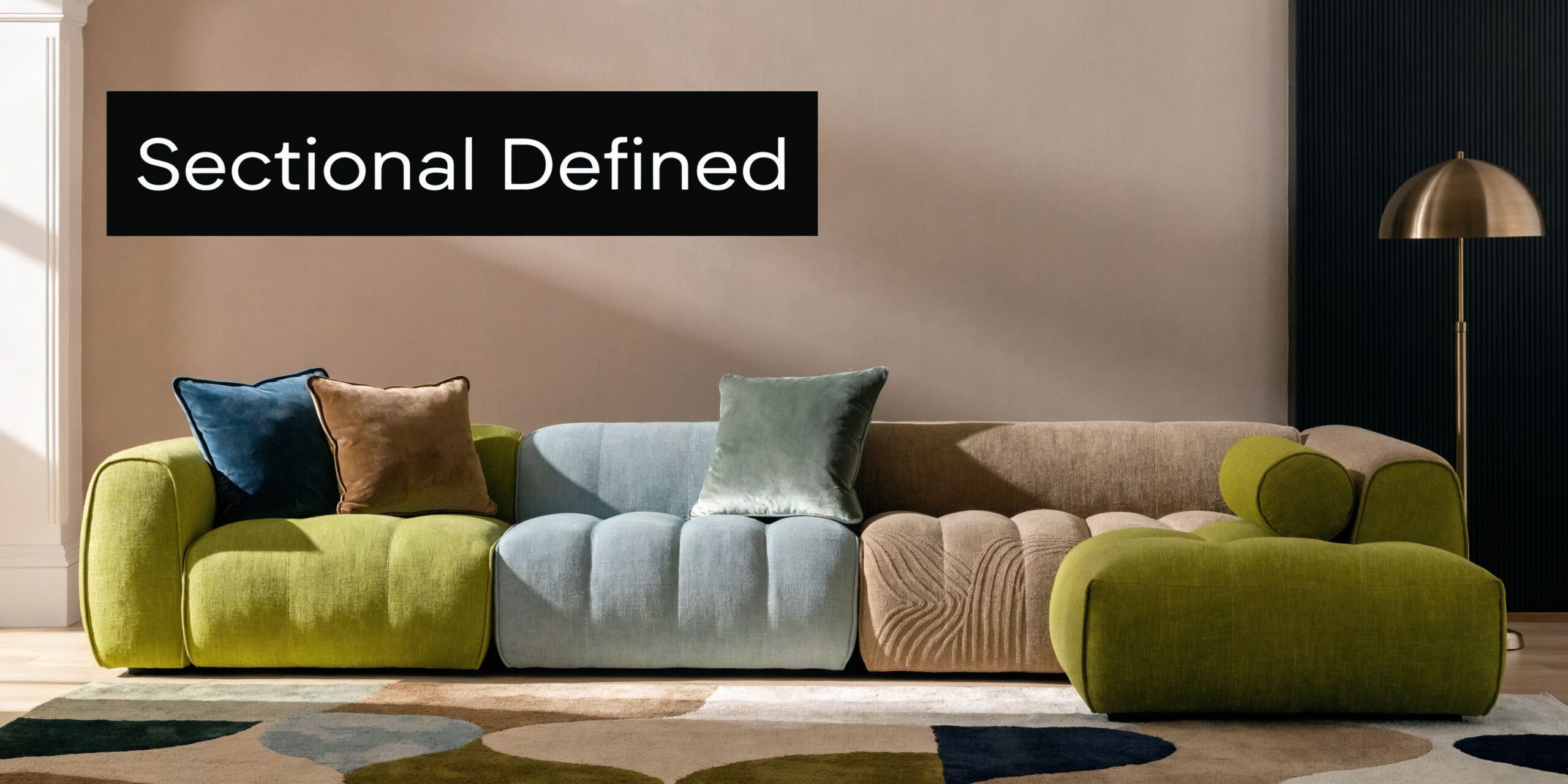
A 4 piece sectional is a seating arrangement made from four separate upholstered sections that connect to function like one large sofa. Think of it as a set of building blocks for your living room.
The pieces usually work together in a planned shape, but they are not all identical. Each section has a role. One may anchor the end with an arm, one may turn the corner, one may add seating in the middle, and one may create a lounging spot.
The pieces you will often see
A common 4 piece setup includes:
- LAF loveseat: LAF means left-arm facing. If you stand facing the sectional, the arm is on the left side.
- Corner wedge: This is the turning point that helps create an L-shape or a wider wraparound feel.
- Armless chair: This middle section adds seating and flexibility.
- RAF chaise: RAF means right-arm facing. A chaise gives you a seat with leg room for stretching out.
That combination is one of the most familiar examples because it gives a room both structure and softness. You get a corner, a lounge seat, and enough width to seat a group without relying on extra accent chairs.
Why this format has become so popular
The popularity is not guesswork. Sectionals, including the popular 4-piece sectional configuration, command a substantial 27.3% share of the global sofa market according to this 4-piece sectional market overview.
That same source explains why shoppers gravitate toward them. A typical 4 piece sectional offers over 12 customizable configurations, and models in this category can fit spaces from 12×12 feet to 20×15 family spaces. One cited example measures 142"L x 68"W x 36"H and weighs 344 lbs, which helps you picture both the scale and the substantial feel of a well-built sectional.
How to picture it in your own room
If the terms feel technical, use this simple test.
A traditional sofa is one complete sentence. A 4 piece sectional is four phrases that connect into the sentence your room needs.
That matters because not every home needs the same layout. One household may use the chaise as the favorite after-dinner seat. Another may rely on the corner wedge to soften an awkward room. Another may want the armless section because it keeps the arrangement from feeling bulky.
Consider this approach:
| Seating type | Best for | Main limitation |
|---|---|---|
| Standard sofa | Straight walls and simpler layouts | Less flexibility |
| Sofa plus loveseat | Traditional arrangements | Can feel chopped up |
| 4 piece sectional | Family seating, open rooms, adaptable layouts | Needs careful measuring |
Terms that confuse shoppers most
The most common point of confusion is arm orientation.
LAF and RAF are described from the perspective of someone facing the furniture. That small detail prevents a lot of ordering mistakes.
Another point of confusion is whether “4 piece” means four equal seats. It does not. It means four connected components, each with a different purpose depending on the design.
Once you understand that, the category becomes much easier to shop. You stop looking at a big sectional as one giant object and start seeing it as a flexible seating system.
Your Guide to Sectional Configurations
Shoppers often do not worry about whether a sectional looks nice. They worry about getting stuck with the wrong shape.
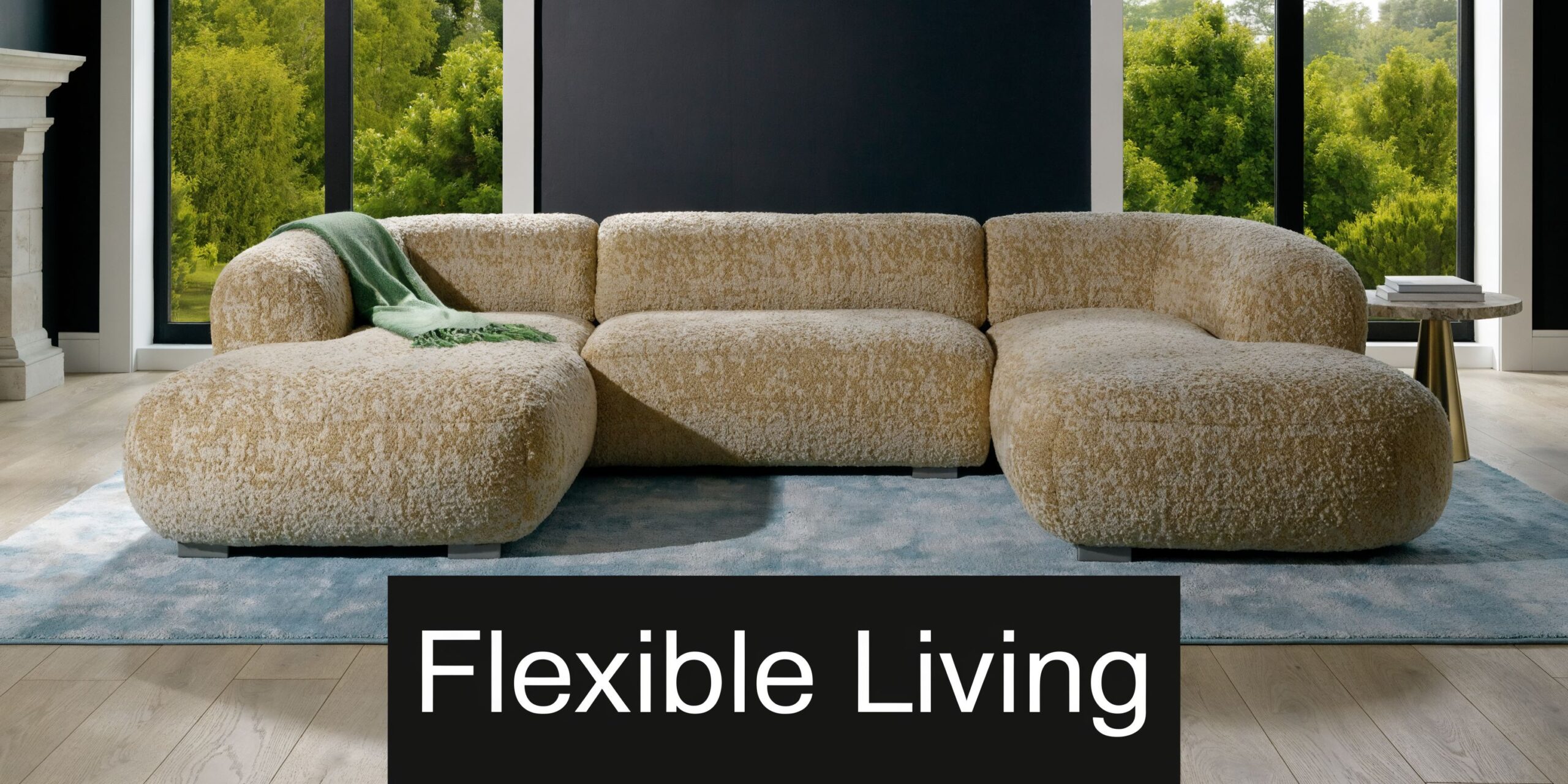
That concern is fair. A sectional is a major piece of furniture, and the layout affects how the whole room works. The good news is that many 4 piece sectionals are designed around modular thinking, which means you can often adapt the arrangement as your needs change.
The most common ways to arrange one
A 4 piece sectional usually lands in one of a few practical layouts.
L shape
This is the classic choice.
It works well in corners, helps define an open living area, and gives one side of the room a relaxed lounge seat. If your room needs a clear seating zone, this is often the easiest arrangement to live with.
Straight with chaise
Some homes do better with a more linear layout.
This setup keeps the room open visually while still giving one person a place to stretch out. It can be especially useful if the room is long rather than square.
Wide conversational layout
In some rooms, the pieces can be arranged to create a more open seating cluster.
This style can help when you want the sectional to face both a television and the rest of the room. It feels less corner-bound and can be more social.
Understanding Reconfiguration
Shoppers often assume a sectional comes in one shape forever. That is where many product listings fall short. Research into shopper behavior shows that retailers often do not explain how pieces connect, disconnect, or can be reconfigured over time, even though that flexibility matters to families and renters. That gap is described in this overview of 4 piece sectional shopping hesitation.
That missing explanation leads to practical questions:
- Can I switch the chaise side later
- Can I separate the pieces when I move
- Are all four modules movable
- Will the shape still work if this room becomes an office or playroom
The answer depends on the exact model, but modular sectionals are attractive because they often give you more than one life with the same purchase.
For more buying guidance, this sectionals guide before buying a sectional is worth reading.
How reconfiguration helps in real life
A good way to evaluate flexibility is to think beyond move-in day.
A few common examples:
- You move to a new rental: A corner setup in one apartment may become a straighter layout in the next.
- Children grow up: A room that once centered on floor play may later need better conversation seating.
- You work from home: One side of the room may need to open up for a desk or storage piece.
- You refresh the space: Reversing the arrangement can make the room feel new without replacing the furniture.
If flexibility matters to you, ask one direct question before buying. Which pieces can be rearranged, and which pieces are fixed by design?
A simple way to choose the right configuration
Use function first, not style first.
Ask yourself where people naturally look, where they walk, and who uses the room most. Then match the shape to that behavior.
| If your room needs… | A good configuration to consider |
|---|---|
| Defined seating in a corner | L shape |
| Open sight lines | Straight with chaise |
| More face-to-face interaction | Wide conversational arrangement |
This is also where many buyers realize they do not need the biggest sectional. They need the one that supports the way the room is used every day.
A 4 piece sectional earns its keep when it adapts with you. That flexibility is one of the strongest reasons to choose this category in the first place.
Measuring for Success and Planning Your Room
Many online furniture mistakes begin with one hopeful thought. “It should fit.”
That is not a plan. A 4 piece sectional needs a little more care than that because the footprint, the corners, and the path into the home all matter.
A common dilemma for shoppers is knowing whether a sectional will fit their room at all. Product pages may mention L-shapes or curved designs, but they often stop short of giving a true framework for room sizing. That problem is noted in this roundup of 4 piece sectional shopping challenges.
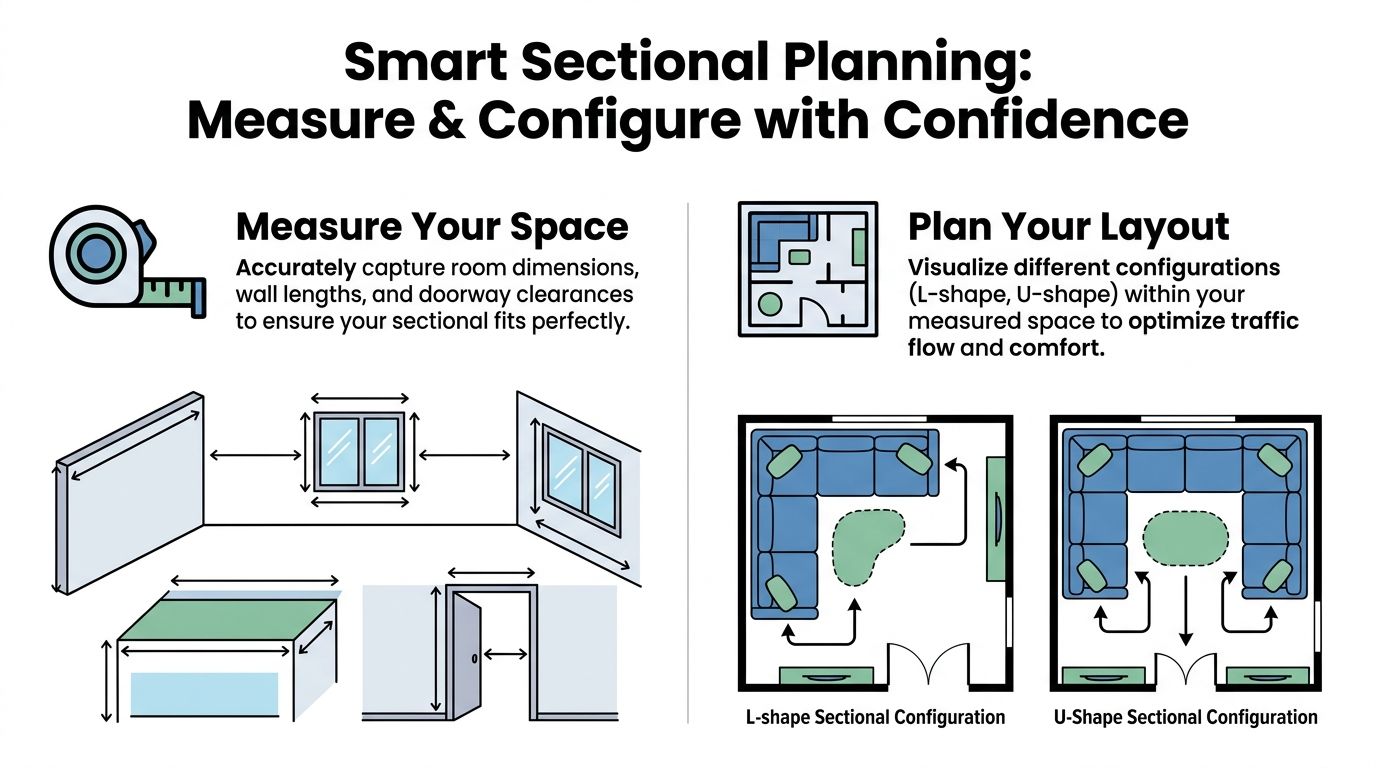
The easiest way to reduce stress is to measure in layers.
Start with the room itself
Take the full room dimensions first. Then measure each wall the sectional might sit against.
Do not stop there. Note windows, floor vents, radiators, outlets, and anything that affects where the sectional can go.
A practical measuring walkthrough is available in this guide on how to measure furniture.
Measure the path, not just the destination
A sectional can fit the room and still fail at the front door.
Check these access points before you order:
- Doorways: Measure width and height.
- Hallways: Watch for tight turns.
- Staircases: Include ceiling clearance and landings.
- Elevators: If applicable, measure the inside dimensions and the door opening.
The room is only half the equation. Every piece also has to travel from the truck to its final spot.
Use painter’s tape before you buy
One of the best low-tech tools is painter’s tape on the floor.
Mark out the sectional’s footprint based on the listed dimensions. Then walk around it. Sit in a nearby chair. Open the coffee table if you already have one. You will feel quickly whether the shape works or whether it blocks the flow.
This is especially helpful if you are choosing between a chaise layout and a more balanced corner arrangement.
A simple room planning matrix
The exact fit depends on the model, but the planning logic stays consistent.
| Room situation | What to check first | What usually works best |
|---|---|---|
| Small square room | Traffic flow around corners | Compact L-shape |
| Long rectangular room | Visual openness | Straight layout with chaise |
| Open concept space | How the sectional defines the zone | L-shape or wider conversational setup |
| Multi-use family room | Space for side tables, storage, or play | Flexible modular arrangement |
Questions that save headaches
Some of the best room-planning questions are the simplest ones.
Where will people walk
If the sectional interrupts the most natural route through the room, it will always feel too big, even if it technically fits.
What still needs to live here
Think beyond the sectional itself. Side tables, lamps, ottomans, media consoles, and even baskets need space.
What does the room need to do
A movie room and a conversation room are not planned the same way. If your living room handles both, your layout should support both.
A quick checklist before you order
- Confirm the sectional dimensions
- Map the footprint on the floor
- Measure every entry point
- Check nearby furniture sizes
- Leave enough open space for movement
- Recheck arm orientation before purchase
Room planning may not be the glamorous part of shopping, but it is one of the most valuable. Buyers who measure carefully usually feel more confident, make faster decisions, and end up happier with the result.
Decoding Materials and Quality Construction
A sectional may look soft and inviting on the outside, but the true difference between a short-term purchase and a long-term one is hidden inside.
That is where cushion construction, support systems, and frame quality matter. If you have ever sat on a sofa that looked good but felt tired too soon, you already know the problem. The shape softens, the seat sinks, and comfort becomes inconsistent.
What strong cushion support looks like
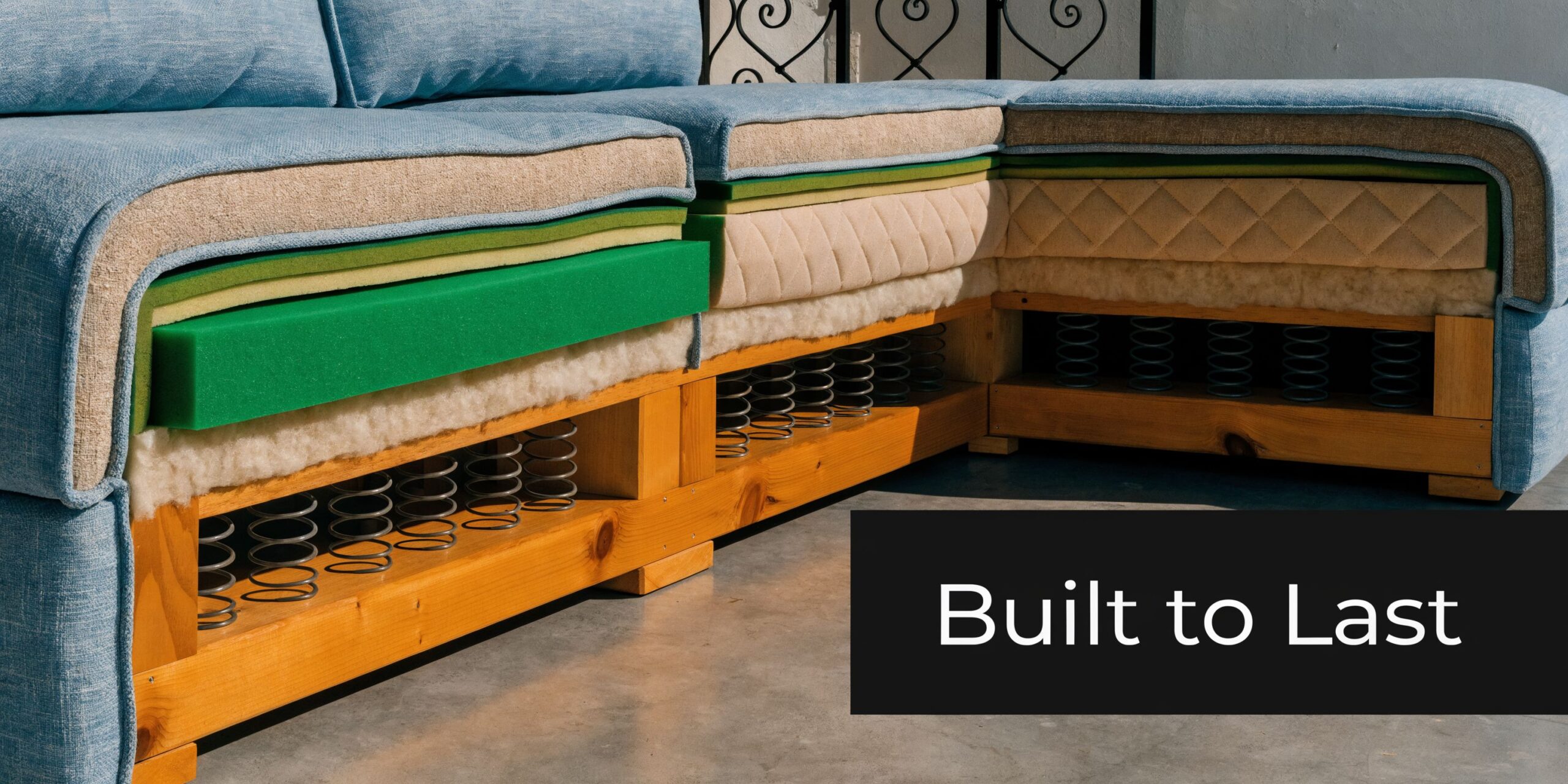
The most helpful phrase to know is multi-density foam.
That means the cushion uses layers or combinations of foam rather than one simple block. The result is a seat that feels supportive but not flat, and comfortable without collapsing too quickly.
Construction matters even more when that foam sits over a solid support system. According to this explanation of four-seater sectional construction, multi-density foam cushions over pocketed coil or sinuous wire constructions can reduce sagging by 25-30% over 5 years of daily use and resist permanent deformation up to 40% more than standard foam, helping the sectional maintain its comfort and shape for 10-15 years.
Pocketed coils and sinuous wire in plain language
These terms can sound technical, but the benefits are easy to understand.
Pocketed coils
These are individual springs wrapped in fabric pockets beneath the seat cushion. They help distribute weight and support each seat more evenly.
For the person sitting down, that often means the seat feels more stable and less likely to develop one obvious “favorite spot” sag.
Sinuous wire
This is a heavy wire support system arranged in repeated curves across the seat deck.
It flexes when someone sits and then helps the cushion return to shape. A sectional built this way can feel supportive and resilient, especially in family rooms that get constant use.
If you want a sectional for everyday living, look past the fabric first. Ask what is under the cushions.
The frame matters too
Even excellent cushions need a dependable base.
Look for a sectional with a sturdy frame and clean, even construction. You want the whole piece to feel substantial when you sit down, not wobbly or uneven. A well-built sectional should feel anchored.
Warning signs are usually easy to spot in person or ask about online:
- Uneven seat feel: One section feels noticeably softer than the next.
- Visible shifting: Pieces slide apart too easily during normal use.
- Lightweight feel: The unit feels insubstantial for its size.
- Loose fit and finish: Seams, arms, or bases look inconsistent.
Comfort and durability should work together
Some buyers think they need to choose between a soft sectional and a durable one. Good construction aims for both.
A better-made 4 piece sectional usually gives you:
| Construction feature | What you notice at home |
|---|---|
| Multi-density foam | Better shape retention and more consistent comfort |
| Pocketed coils | More even support across seats |
| Sinuous wire support | Responsive seat feel |
| Reversible cushions | More balanced wear over time |
This is why construction details matter so much in busy households. Kids climb on sectionals. Guests gather there. Pets claim corners. A living room workhorse needs interior materials that can keep up.
A beautiful silhouette gets attention first. Quality construction is what keeps the sectional worth owning.
Finding Your Perfect Style and Upholstery
Once you know the sectional will fit and the construction is sound, the fun part begins. You get to choose how it will feel in your home.
A 4 piece sectional often becomes the visual anchor of the living room. That means the upholstery, color, and shape do more than provide seating. They set the tone for everything around them, from area rugs to cocktail tables to nearby living room sets.
Match the style to the way you live
Some rooms call for a clean sectional with crisp lines. Others need something softer and more relaxed.
Consider this approach:
- Modern rooms: Look for cleaner lines, lower profiles, and simpler silhouettes.
- Traditional spaces: Softer arms and warmer textures can feel more settled.
- Family-centered rooms: Casual shapes and forgiving fabrics often make the most sense.
- Refreshed spaces: A sectional can act as the one large update that changes the whole room.
Fabric or leather
The right answer depends less on trend and more on daily life.
Fabric upholstery
Fabric sectionals often feel warm, approachable, and easy to layer with pillows and throws. They are a strong fit for homes where comfort comes first.
Polyester upholstery is a common choice because it offers style flexibility and a practical everyday feel.
Leather upholstery
Leather gives a room a more polished look and can pair beautifully with wood tables, accent lighting, and grounded color palettes.
It is often a strong fit for dens, formal living rooms, or homes that lean classic rather than casual.
Use your household as the filter
If you are unsure what upholstery makes sense, start with your routine.
| Lifestyle need | Upholstery direction to consider |
|---|---|
| Kids and pets | Easy-care fabric or forgiving textured upholstery |
| Dressier look | Leather or smooth, precise fabric |
| Cozy everyday lounging | Soft woven fabric |
| Seasonal room refresh | Versatile neutral upholstery |
The best upholstery is not the one that looks perfect untouched. It is the one that still looks good after real life happens.
Color matters too. A neutral sectional can simplify decorating and let you change the room with pillows, throws, and decor. A richer color can turn the sectional into the focal point and reduce the need for extra statement pieces.
If you want to compare finishes and feel more confident about surface choices, this guide to upholstery materials is a helpful next step.
A good 4 piece sectional should suit your style, but it should also support your habits. When those two line up, the room starts to feel both beautiful and easy to live in.
The Short Furniture Advantage From Our Family to Yours
Choosing a 4 piece sectional gets easier when you focus on the right questions.
Will it fit your room. Can the layout adapt with you. Is it built with materials that can handle daily life. Does the upholstery match how your household lives. Those are the questions that lead to good decisions.
For many shoppers, the next question is where to buy with confidence.
That is where experience matters. A family-owned furniture store that has served Illinois since 1870 brings something different to the process. There is history behind the advice, but there is also practical help for modern shoppers who want to browse online, compare options quickly, and furnish their homes without unnecessary stress.
Why that matters when buying a sectional
A sectional is not a throw pillow purchase. It affects the whole room, and it usually stays with you for years.
The buying experience should help you solve problems, not create them. That means clear product discovery, real support, and services that make the decision easier.
What helps most during the buying process
Some benefits matter more than marketing language.
- Flexible financing options: Helpful when you want the right sectional now without delaying the whole room.
- Reliable delivery: Important for large furniture that needs to arrive safely and on schedule.
- Complimentary design consultations: Useful when you are comparing configurations, room flow, or upholstery choices.
- Broad furniture selection: A plus if you want to coordinate your sectional with coffee tables, bedroom furniture, dining tables, mattresses, or home office pieces.
Better than guessing alone
Big-box online shopping can leave buyers doing all the planning themselves. That can work for small decor, but it is less reassuring when you are choosing a major living room piece.
A better experience usually includes:
| Buying concern | What good support looks like |
|---|---|
| Unsure about layout | Guidance on sectional configuration |
| Worried about fit | Help reviewing room measurements |
| Need the room finished | Options across multiple furniture categories |
| Budget concerns | Financing options that add flexibility |
| Delivery stress | Dependable delivery service |
The value of heritage and convenience together
Local trust still matters. So does online convenience.
The strongest furniture retailers combine both. They offer the reassurance of a long-standing reputation and the ease of shopping from home when your schedule is busy. For many families, that combination makes the process feel less overwhelming and more personal.
A well-chosen 4 piece sectional can change the way a room works. It can create a more comfortable gathering place, solve awkward layout problems, and give your home a centerpiece that feels inviting every day.
The final step is choosing a store that helps you get there with confidence.
Browse the latest 4 piece sectional styles, living room sets, dining tables, mattresses, and more at Short Furniture. If you want help narrowing down the right fit, take advantage of complimentary design consultations, explore reliable delivery options, and apply for financing today to bring home furniture that works beautifully for your space.