



Best Mattress for Side Sleepers with Shoulder Pain

Waking up with a sore shoulder can make a good night’s sleep feel out of reach. You go to bed tired, settle onto your side the way you always have, and then wake up with that familiar ache in your upper arm, shoulder joint, or neck. For many people, the problem isn’t just the sleeping position. It’s the surface underneath them.
That matters because side sleeping asks more from a mattress than other positions do. Your shoulder and hip press further into the bed, and if the mattress doesn’t cushion those points while still supporting the rest of you, your body pays for it by morning. The best mattress for side sleepers with shoulder pain usually balances two things at once. It softens pressure at the shoulder and keeps the spine from twisting out of line.
A lot of shoppers get stuck between online reviews, brand claims, and firmness labels that sound helpful but often feel vague in real life. The good news is that shoulder pain from sleep setup is often much easier to solve once you know what to look for.
Your Guide to Waking Up Pain-Free
Morning shoulder pain can feel confusing because it shows up after you’ve been “resting.” But sleep is still a physical activity for your joints and muscles. If your mattress doesn’t fit your body well, your shoulder can stay compressed for hours at a time.
That’s why mattress choice deserves more attention than many people give it. If you’re a side sleeper, your bed isn’t just a piece of bedroom furniture. It’s the surface that decides whether your shoulder gets cushioned or pushed too hard all night.
What most side sleepers get wrong
Many people assume a firmer mattress is always better for pain. Others go the opposite direction and buy something extremely soft, hoping they’ll float on it. Both choices can backfire.
A too-firm bed can create sharp pressure at the shoulder. A too-soft bed can let the middle of your body sink too far, which can pull the shoulder and spine into an awkward position. Good sleep comfort is usually more balanced than that.
Practical rule: If your shoulder feels jammed, numb, or sore in the morning, your mattress may be failing at pressure relief, support, or both.
The mattress is the foundation
Before you swap pillows, add random toppers, or blame age, start with the foundation. The mattress does most of the work. It controls how far your shoulder sinks, how level your spine stays, and whether your muscles can relax overnight.
If you want a broader look at what helps people feel better in the morning, this guide on keys to waking up refreshed in the morning is a useful next read.
A smart mattress choice can make the rest of your sleep setup easier. Your pillow works better. Your body settles faster. And you’re less likely to spend the night tossing from one sore spot to the next.
Understanding Why Your Shoulder Hurts From Side Sleeping
Side sleeping is common, but it puts a lot of weight onto a relatively small area. Your shoulder becomes one of the main contact points between your body and the bed. If the surface can’t spread out that pressure, the joint and surrounding tissue absorb too much of it.

Pressure works like a hand on the floor
Press your hand into a hard floor. You feel force concentrated in a few spots. Now press that same hand into a cushion. The force spreads out, and it feels gentler.
Your shoulder reacts the same way on a mattress. According to this shoulder pain guide, the anatomical root cause of mattress-induced shoulder pain stems from inadequate pressure distribution, where single-material mattresses create localized compression exceeding 40-50 mmHg, triggering nerve compression and reducing blood flow to surrounding soft tissues.
That helps explain why some people wake up with tingling, numbness, or a dull ache. The shoulder isn’t just uncomfortable. It may be under concentrated load for hours.
Alignment matters as much as softness
Pressure relief alone isn’t enough. A mattress can feel soft on top and still create pain if the rest of the body drops out of line.
Think of your spine as a straight bridge from neck to lower back. When you lie on your side, your shoulder needs enough room to settle into the mattress. At the same time, your waist and hips need support so the bridge doesn’t sag or twist. If the bed is too hard, the shoulder gets pushed upward. If it’s too soft in the middle, the torso dips and rotates.
When your shoulder is cushioned but your hips are supported, your body can rest in a more neutral line.
Common signs your mattress is part of the problem
A mattress may be contributing to shoulder pain if you notice patterns like these:
- Morning-only soreness: Pain is strongest when you wake up and improves after moving around.
- One-sided discomfort: The shoulder you sleep on hurts more than the other one.
- Numb arm or hand: Pressure may be building at the shoulder and affecting nearby nerves.
- Frequent position changes: You keep rolling because one spot gets uncomfortable.
- Neck and shoulder pain together: Misalignment often affects both areas at once.
This is why mattress shopping for shoulder pain can’t be reduced to “soft” or “firm.” The question is whether the mattress distributes pressure and supports the rest of your frame at the same time.
How a Mattress Can Heal or Hurt Your Shoulders
The best mattress for side sleepers with shoulder pain usually comes down to three choices working together. Material, firmness, and zoned support all affect whether your shoulder feels cradled or compressed.
Doctor-reviewed 2026 evaluations confirm that medium-firm hybrid mattresses in the 5-6.5/10 firmness range are optimal for side sleepers with shoulder pain. In the same evaluations, models like the Saatva Rx alleviated discomfort for 82% of testers by combining zoned lumbar support with plush shoulder zones, as noted in NCOA’s review of mattresses for shoulder pain.
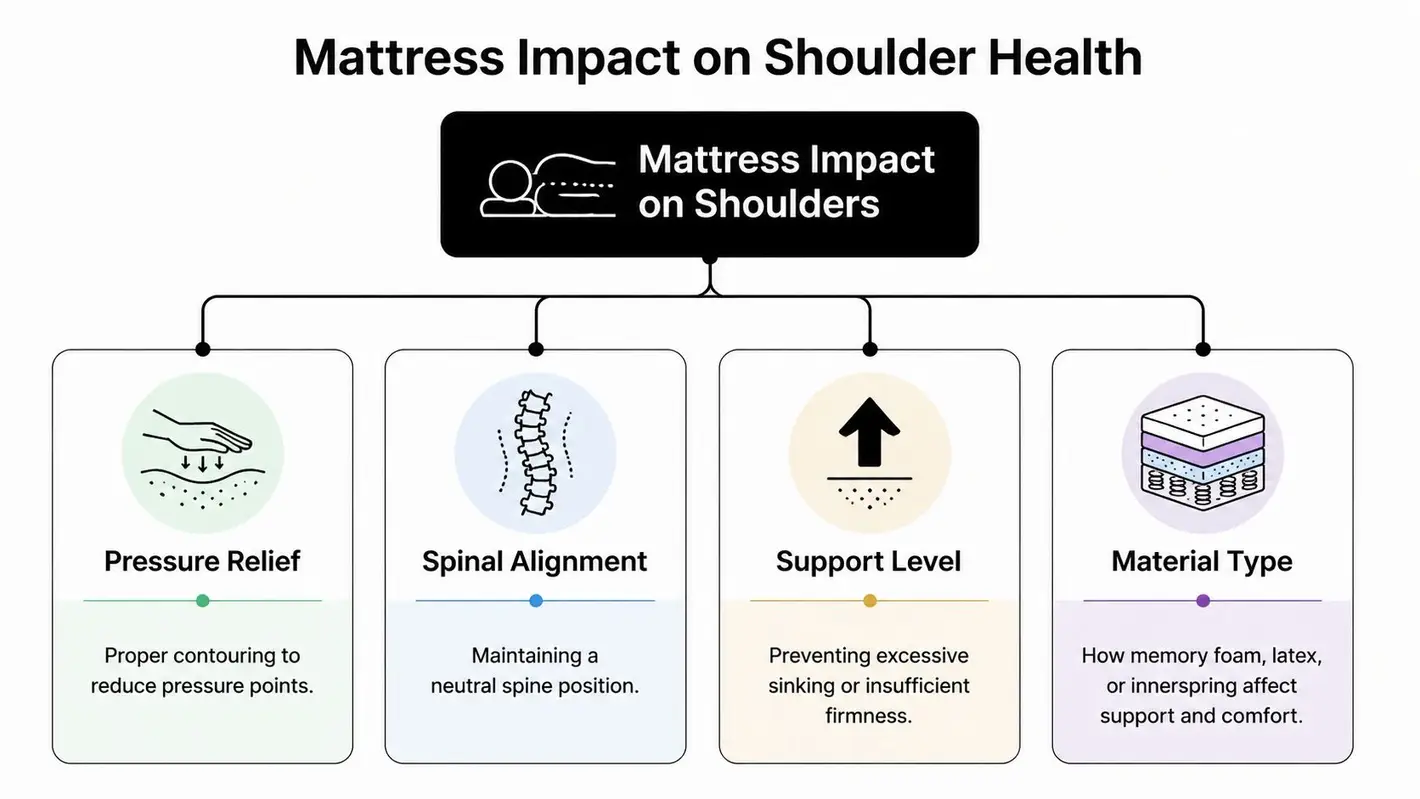
Material changes how the bed responds
Some materials hug the body. Some push back quickly. Some do both.
For side sleepers with shoulder pain, that difference is huge because the shoulder needs enough give to settle in without the rest of the body collapsing around it.
| Material Type | Pressure Relief | Spinal Alignment | Cooling |
|---|---|---|---|
| Memory foam | Strong contouring around shoulders and hips | Can be good if support layers are sturdy | Can sleep warmer |
| Latex | Responsive, but may feel pushy at the shoulder | Often supportive | Usually better airflow than dense foam |
| Hybrid | Foam comfort with coil support underneath | Often strongest balance for side sleepers | Generally better airflow than all-foam |
Memory foam, latex, and hybrid feel different in real life
Memory foam often feels best at first contact because it contours closely to the shoulder. For people who want a hugging feel, that can be a relief. The tradeoff is that some foam beds hold more heat and can feel harder to move around on.
Latex is springier and more buoyant. Some sleepers love that lifted sensation. But for people with severe or pressure-sensitive shoulder pain, latex can create a pushback effect that doesn’t let the shoulder settle adequately, which is one reason this side-sleeper mattress analysis points to memory foam hybrids as the evidence-based gold standard for this group.
Hybrids combine a contouring top with a coil base. That blend is often the sweet spot. The foam helps reduce sharp pressure under the shoulder, and the coils support the torso and hips so you don’t fold inward.
Zoned support solves a common side-sleeper problem
A flat mattress can treat every part of your body the same. Your body isn’t built that way.
Your shoulders need more give than your waist. Your hips and midsection usually need more support than your upper arm. Zoned support addresses that by making different areas of the mattress feel different under different body parts.
That’s why zoned hybrids get so much attention for shoulder pain. A softer shoulder zone lets the joint settle in. A firmer center section keeps the spine more level.
What to look for: A mattress that feels gentler under the shoulders and steadier under the hips will usually outperform a bed with the same feel from top to bottom.
Why “medium-firm” works better than it sounds
Some shoppers hear medium-firm and picture a hard mattress. In practice, many medium-firm hybrids feel comfortable on top and supportive underneath. They aren’t board-like. They’re balanced.
This is especially helpful for side sleepers because they need surface softness without deep sagging. A plush top layer alone won’t fix shoulder pain if the support core underneath gives way. On the other hand, strong support won’t help if the comfort layer is too stiff to let the shoulder settle.
A simple way to think about mattress design
The most effective builds for shoulder relief often include:
- A plush comfort layer: This cushions the shoulder at first contact.
- A transition layer: This prevents the body from dropping too suddenly.
- A supportive base: This keeps the hips and torso from sinking too far.
That’s the reason many shoppers end up happiest with hybrid models rather than basic all-foam or old-style innerspring beds. They need contouring and support together, not one at the expense of the other.
Choosing the Right Firmness for Your Body Weight
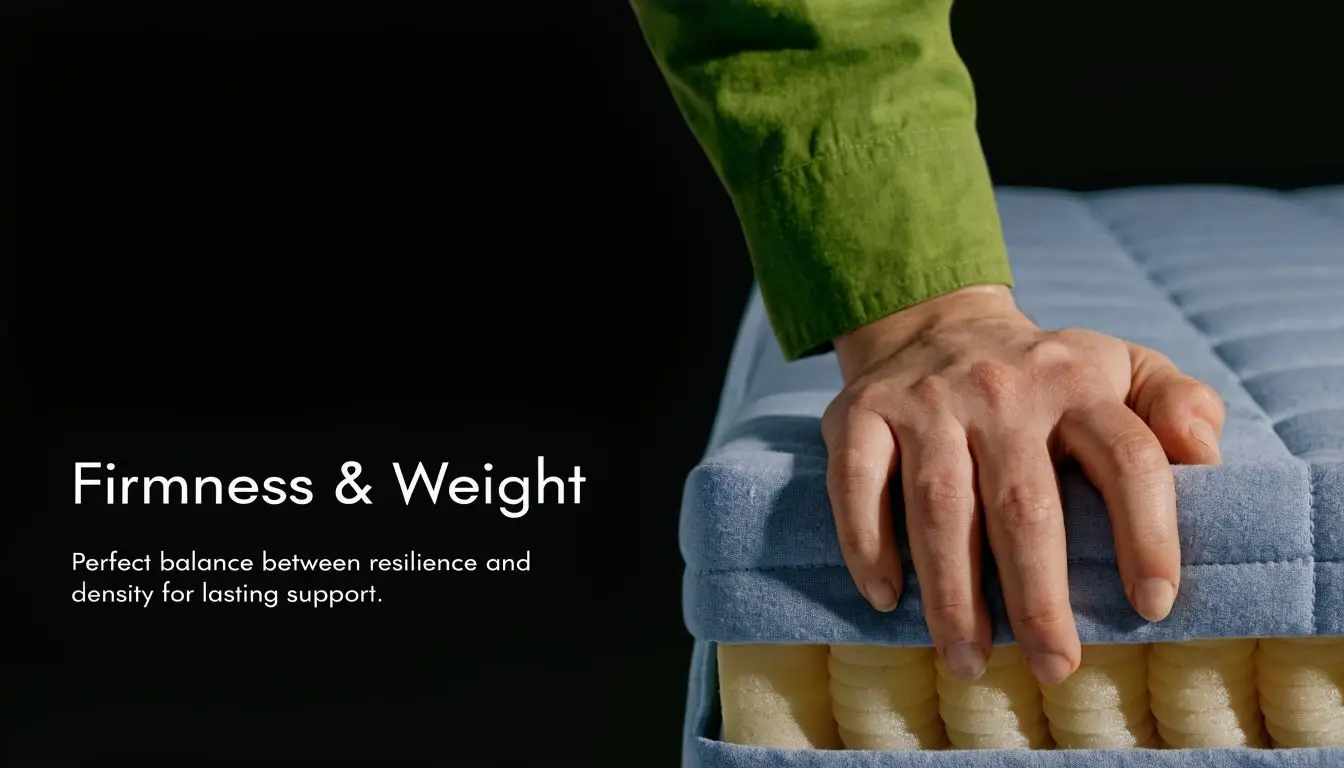
Firmness advice gets confusing because people talk about it as if one feel works for everyone. It doesn’t. Body weight changes how far you sink into a mattress, which means the same bed can feel soft to one sleeper and hard to another.
The impact of body weight is critical. Lighter sleepers under 130 lbs often need softer foams to achieve contouring, while heavier individuals over 250 lbs require reinforced hybrids to prevent bottoming out, as noted in NapLab’s side-sleeper mattress guide.
Under 130 lbs
If you’re lighter, a mattress often feels firmer to you than it does to someone heavier. That’s because your shoulder doesn’t sink as much into the comfort layers.
For side sleeping, that can be a problem. If the shoulder can’t sink enough, pressure builds quickly.
A softer or medium-soft feel usually makes more sense here. You want enough contouring to fill the curves around the shoulder and side of the rib cage. If the bed feels “flat” or “stiff” when you lie on your side, it’s probably not giving you enough.
Between 130 and 230 lbs
This is the range where many medium to medium-plush hybrids work well. You’re heavy enough to engage the comfort layers, but you still need a support core that keeps your spine from bending downward.
This group usually does best when the mattress offers a clear balance. The surface should cushion the shoulder, but the center of the bed should still feel stable. In such cases, zoned support can shine because it lets the mattress respond differently under the shoulder than under the hips.
If you’re in the middle weight range and sleep on your side, a mattress that feels gently cushioned on top and steady underneath is often the safest starting point.
Over 230 lbs
Heavier side sleepers face a different challenge. A mattress may feel comfortable for a few minutes, then let the body sink too far over the course of the night.
When that happens, the shoulder may not be the only issue. The hips and torso can dip enough to pull the spine out of line, which can increase shoulder tension even if the top feels soft.
A more supportive hybrid with reinforced coils usually makes better sense than a soft all-foam bed. You still need pressure relief, but you also need durability and pushback in the deeper layers so the mattress keeps your body level.
Why “firmness” is only half the story
A mattress label doesn’t tell you everything. One brand’s medium can feel very different from another’s. Construction matters as much as the number on a firmness scale.
That’s why it helps to think in questions instead of labels:
- Does your shoulder settle in, or sit on top?
- Do your hips feel supported, or do they drop?
- Does your waist feel suspended, or well filled in?
If you want a more practical breakdown, this guide on how to choose the right mattress firmness explains how different firmness levels feel in everyday use.
One quick self-check at home
Lie on your side for several minutes on your current mattress. Pay attention to the first place your body complains.
If it’s your shoulder first, the top may be too firm. If your lower back, waist, or hip starts to feel twisted, the support underneath may be too soft. That simple check can narrow your search fast.
Beyond the Mattress Pillows Toppers and Sleep Habits
A mattress does the heavy lifting, but it doesn’t work alone. If your pillow is too tall, too flat, or too soft to hold shape, it can undo some of the good work your mattress is doing below.
That’s why shoulder relief usually comes from a sleep system, not a single purchase. The bed supports your body from underneath. The pillow supports the gap between your head and the mattress. Toppers can fine-tune feel if you’re close but not quite comfortable.

The right pillow keeps the neck and shoulder calmer
Side sleepers usually need a pillow with enough loft to fill the space between the head and mattress. Too little support lets the head tilt downward. Too much pushes it upward. Either one can feed strain into the shoulder.
Look for a pillow that keeps your head level with the rest of your spine. If you often wake with pain near the top of the shoulder or base of the neck, your pillow may be part of the problem.
This guide on how to choose the perfect pillow can help you narrow down loft and feel.
A topper can help, but it can't fix everything
A topper is useful when your mattress is close to right but still feels a little too firm or lacks a bit of cushioning. It can add comfort at the surface and soften shoulder pressure.
But a topper can’t correct a mattress that is sagging badly or failing in deep support. If the center of the bed is already dipping, adding more softness on top usually makes alignment worse.
Use a topper when you need adjustment, not rescue.
Cooling matters more than many side sleepers expect
Side sleepers often sink further into foam around the shoulder and hip. That closer contact can trap warmth. For some people, heat makes it harder to stay asleep and easier to feel achy and restless.
Temperature regulation is a key concern, as side sleepers sink deeper into contouring foams that can trap heat. Recent developments like gel-infused foams in the Nectar Premier Hybrid improve breathability by 25% in NCOA tests, according to Saatva’s guide to the best mattress for side sleepers.
Small habits that support a better setup
Even with the right bed, these habits can help:
- Support the top arm: Hugging a pillow can reduce shoulder collapse.
- Keep the painful shoulder from curling forward: A body pillow can help stabilize your upper body.
- Avoid sleeping with your arm tucked under you: That often increases pressure and numbness.
- Check your bedding temperature: Heavy, heat-trapping layers can make pressure points feel worse.
A good mattress lowers the problem. The right pillow and sleep habits help keep it from coming back.
Your Smart Shopping Checklist from Short Furniture
Buying a mattress online can feel like guesswork when every product page promises comfort. A better approach is to shop with a checklist. That keeps your focus on features that matter for shoulder relief instead of marketing language.
A 2026 analysis identifies the Helix Midnight Luxe as a top-rated bed for side sleepers, earning perfect scores in pressure relief for shoulders and hips due to its medium firmness and adaptive foam layers, as highlighted in the Sleep Foundation’s side-sleeper mattress guide. That gives you a useful model for what to look for, even if you’re comparing several brands.
Start with the feel profile, not the brand name
A mattress name doesn’t tell you much. The construction does.
Look for these signals first:
- Medium to medium-firm feel: Especially if you’re an average-weight side sleeper.
- Hybrid construction: Foam on top, coils underneath.
- Pressure-relieving comfort layers: The shoulder needs cushioning, not a flat hard surface.
- Zoned support if available: This is especially helpful for side sleepers.
If a mattress checks those boxes, it belongs on your shortlist.
Read product details like a filter
When you compare models, ignore vague words like “luxury” or “ultimate.” Focus on details that connect directly to your body.
Ask yourself:
- Is the top layer meant to contour at the shoulder?
- Does the support core sound sturdy enough for your weight?
- Does the mattress mention cooling features if you sleep hot?
- Will it be easy to move on if you change positions often?
These questions help you shop for outcomes, not slogans.
Use your body weight as a decision tool
Many people skip this and end up disappointed. A bed that gets glowing reviews may still be wrong for you if those reviewers have very different support needs.
If you want a quick side-sleeper buying reference, these side sleeper mattress results can help you compare what a better fit looks like.
Don’t forget the buying experience
The mattress matters. The store experience matters too.
A smart purchase includes practical details such as:
- Delivery options: Reliable delivery makes setup easier and reduces hassle with heavy mattresses.
- Financing availability: Flexible financing can make a better long-term mattress more manageable.
- Guidance from real people: A knowledgeable sleep consultation can save you from costly trial and error.
- Related products in one place: Pillows, bed frames, and adjustable bases can help complete the setup.
This is especially useful if you’re also updating a bedroom, guest room, or even refreshing other spaces with living room furniture, dining pieces, or home office essentials at the same time. Many shoppers want a smoother whole-home process, not a scattered one.
The best shopping decision isn’t just finding a popular mattress. It’s finding one that matches your body, your sleep habits, and the support you want after checkout.
A final pre-purchase check
Before you buy, make sure you can answer yes to most of these:
- I know my preferred sleeping position is side sleeping
- I know whether I need softer contouring or stronger support
- I’ve considered heat, movement, and ease of repositioning
- I’ve matched the mattress feel to my body weight
- I’m buying with a clear plan, not just reacting to a sale
That kind of clarity usually leads to a better outcome than chasing the loudest mattress ad.
A Heritage of Restful Nights Begins Tonight
Shoulder pain during sleep often feels personal, but the solution is usually practical. Your shoulder needs pressure relief. Your spine needs support. And your body weight changes how a mattress should feel underneath you.
Once you know that, mattress shopping gets less overwhelming. You can stop guessing between “soft” and “firm” and start looking for signs of a good fit. For many side sleepers, that means a hybrid build, balanced firmness, and enough contouring at the shoulder without sagging through the middle.
A complete setup helps too. The right pillow can protect neck alignment. A topper can fine-tune comfort. Cooling features can make a big difference if you sleep warm and wake up restless.
Better sleep rarely comes from picking a mattress at random. It comes from choosing one that works with your body, not against it. That’s what turns bedtime from a source of frustration into real recovery.
If you’re searching for the best mattress for side sleepers with shoulder pain, stay focused on fit, support, and pressure relief. Those are the features that matter most when the goal is waking up with less pain and more energy.
Frequently Asked Questions About Sleep and Shoulder Pain
How long does it take to adjust to a new mattress
Some people feel relief quickly, while others need a little time to adjust to a different support pattern. What matters most is the trend. If your body feels steadily better rather than worse, that’s usually a good sign.
If pain keeps increasing or the same pressure point shows up every morning, the mattress may still be the wrong fit.
Can the wrong pillow still cause pain if the mattress is right
Yes. A mattress supports the body from below, but the pillow controls head and neck position. If the pillow is too high or too low, it can pull tension into the neck and upper shoulder even when the mattress itself is a strong match.
Is memory foam or hybrid better for shoulder pain
That depends on how much support you need underneath the contouring. Memory foam can feel excellent at the shoulder, but some sleepers prefer the easier movement and stronger support that hybrids often provide. Many side sleepers with shoulder pain do best with hybrids because they combine cushioning and structure.
What if my partner and I have different sleep needs
Look for a mattress with balanced support and decent motion control. Hybrids with individually responsive support layers often work well for couples because they can offer pressure relief without making the whole bed feel unstable.
If one of you sleeps much hotter, moves more, or prefers a different firmness, that should be part of the comparison process before buying.
Can a mattress topper fix shoulder pain
Sometimes, but only if the underlying mattress is still supportive. A topper can soften surface feel and reduce shoulder pressure. It can’t repair a mattress that sags through the center or lacks proper support.
Should side sleepers avoid very firm mattresses
Many side sleepers with shoulder pain should be cautious with very firm beds because the shoulder may not sink in enough. That can create pressure instead of relief. The better goal is supportive comfort, not hardness.
When should I talk to a doctor
If shoulder pain keeps waking you up, doesn’t improve, or comes with weakness, numbness, or reduced range of motion, it’s wise to talk with a medical professional. A mattress can help with sleep setup, but it can’t diagnose or treat an underlying injury.
If you’re ready to sleep more comfortably, explore Short Furniture for premium mattresses, bedroom furniture, pillows, and whole-home essentials backed by trusted Illinois service since 1870. Browse the latest arrivals online, apply for flexible financing today, and ask about reliable delivery and complimentary design consultations to help you build a bedroom that supports real rest.

