



Master How to Clean Memory Foam Mattress Cover


A great night's sleep starts with a truly clean bed, and that goes far beyond just your sheets. For most memory foam mattresses, the cover can be washed with a gentle machine cycle using cool water and a mild detergent. But—and this is important—always check the care tag first. Some covers need to be hand-washed to avoid shrinking or damaging the fabric.
Your Guide to a Cleaner, Healthier Sleep
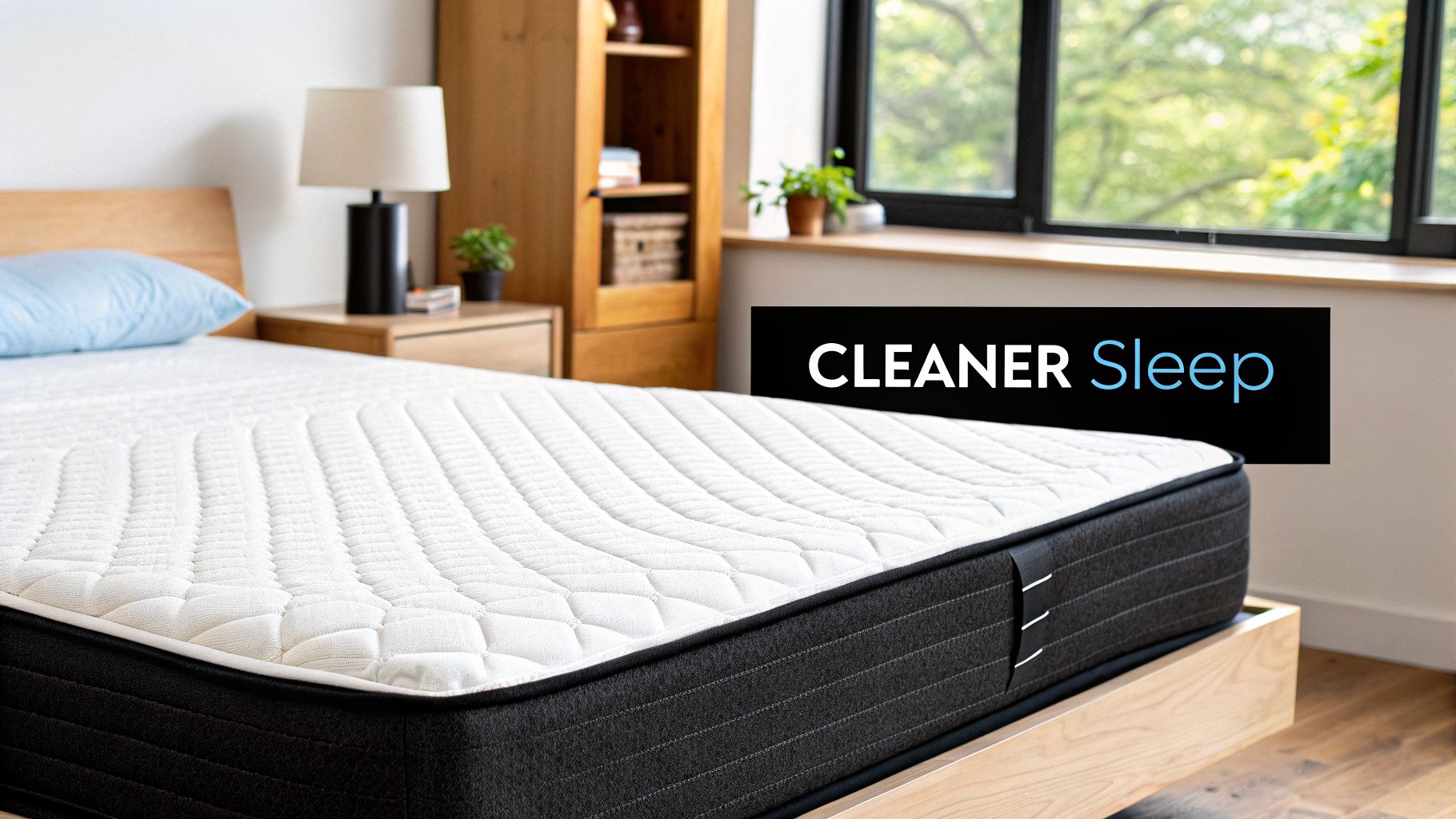
As a family business helping Illinois homes feel more comfortable since 1870, we at Short Furniture know a fresh mattress cover is non-negotiable. Think of it as the first line of defense against allergens and spills, protecting the investment you've made in your nightly comfort. Over time, an unwashed cover collects dust mites and body oils, impacting both sleep quality and bedroom air.
This guide walks you through how to clean your memory foam mattress cover correctly, preserving its feel and extending its life. We're sharing trustworthy advice because a clean bed is the foundation of a healthy home.
At Short Furniture, we believe in quality that stands the test of time—a value we've upheld in our Illinois showrooms for generations. Now, we bring that same commitment to quality and service directly to you online.
Keeping your sleep environment pristine is a key part of your well-being. A proper wash removes allergens that disrupt sleep, ensuring you wake up refreshed. For more ideas, you might find our essential tips for maintaining a dust and allergen-free bedroom helpful.
And if you're looking to build your ideal sleep sanctuary from the ground up, our complimentary design consultations can help create your perfect bedroom. With reliable delivery and flexible financing options, achieving the bedroom of your dreams has never been easier.
Preparing Your Cover for a Safe and Effective Clean
Before your memory foam mattress cover gets near water, a few prep steps make all the difference. As a family business that’s been part of Illinois homes since 1870, we’ve seen simple mistakes lead to shrunken, ruined covers time and again.
This isn't just about getting it clean; it's about protecting the fabric and ensuring it fits back on your mattress perfectly.
Start by gently unzipping and taking the cover off. Be careful not to tug or stretch the material, as this can easily warp its shape. Once it's off, take it outside for a good, vigorous shake to remove loose dust, hair, and crumbs.
First, Read the Fine Print: The Care Label
This is non-negotiable. The single most important thing you can do is find and read the care tag. Ignoring this little label is the fastest way to an expensive mistake.
Those little symbols can feel like a foreign language, so we put together a quick guide to help you decode them and protect your mattress investment.
Decoding Your Mattress Cover Care Label
| Symbol | Meaning | Short Furniture Pro Tip |
|---|---|---|
| Tub with Water | Machine Washable | It's safe for the washer. Always opt for the cold water setting to prevent accidental shrinking. This is gentler on the fibers. |
| Hand in Tub | Hand Wash Only | This means the fabric is too delicate for a machine. Stick to the sink or tub to avoid damaging it. |
| Tub with an 'X' | Do Not Wash | Do not submerge this cover in water. It should only be spot-cleaned. Washing will likely ruin its structure. |
| Circle | Dry Clean Only | Leave this one to the professionals. The materials require special solvents that you don't have at home. |
Understanding these symbols is the first step, but protecting your entire sleep setup goes even further. You can dive deeper in our complete guide to bedding, mattress protectors, and comforters.
Next, Vacuum Away All the Surface Debris
Once you've confirmed your cleaning method, lay the cover flat on a clean floor. Using an upholstery or soft brush attachment, give the entire surface a thorough vacuuming. This pulls up pet dander, dust mites, and skin cells before they get mashed deeper into the fabric.
A vacuum with a HEPA filter is your best friend here.
It’s interesting—while 66% of sleepers swear by memory foam, many don’t realize how quickly hygiene can become an issue. A quick vacuum can remove up to 99% of loose surface debris, making a massive difference. You can see more on this in the latest mattress cleaning service market data.
Taking a few minutes to vacuum first is one of our family’s go-to tips. It prevents you from washing dirt into the fabric, ensuring a much fresher result and protecting the centerpiece of your bedroom—your beautiful mattress.
Washing Your Mattress Cover Without Causing Damage
Once your mattress cover is prepped, the real work begins. A little care goes a long way to get it completely clean without shrinking it, stretching it, or ruining the fabric.
First, go back to that care tag. If it gives you the green light for a machine wash, you’re in luck. Just be sure to use the gentle or delicate cycle with cool water. Hot water is the number one enemy of most mattress covers; it’ll cause the fibers to shrink, making it a nightmare to get back on.
The Right Tools for a Gentle Wash
When it comes to detergent, less is more. Opt for a mild, pH-neutral liquid detergent. Powdered versions sometimes don't dissolve fully in cool water, leaving a chalky film that can irritate your skin. Steer clear of anything with bleach or harsh additives, as they will break down the fabric.
If your cover is hand-wash only, the process is just as straightforward.
- Fill a clean bathtub or large basin with cool water.
- Add a small amount of mild liquid detergent and swish it around.
- Submerge the cover and gently move it around. Let it soak for about 30 minutes.
- Drain the soapy water and rinse the cover with fresh, cool water until all suds are gone. Gently squeeze out the extra water, but never wring or twist the fabric to avoid stretching it out of shape.
This is exactly why so many of the premium mattresses in our online collection feature covers that are not only removable but machine-washable. We understand that practical maintenance is just as important as comfort.
Handling Stains and Ensuring a Full Clean
Let's face it—accidents happen. For the 80% of households that deal with occasional spills, pretreating stains before the main wash is a must.
Your best friend here is an enzyme cleaner, formulated to break down proteins in over 85% of common biological stains like sweat or coffee. Dab a little onto the spot, let it sit for a few minutes, then gently blot it with a cool, damp cloth. Never reach for bleach, as it can degrade foam by up to 25%.
This simple prep work is what separates a clean cover from a damaged one.
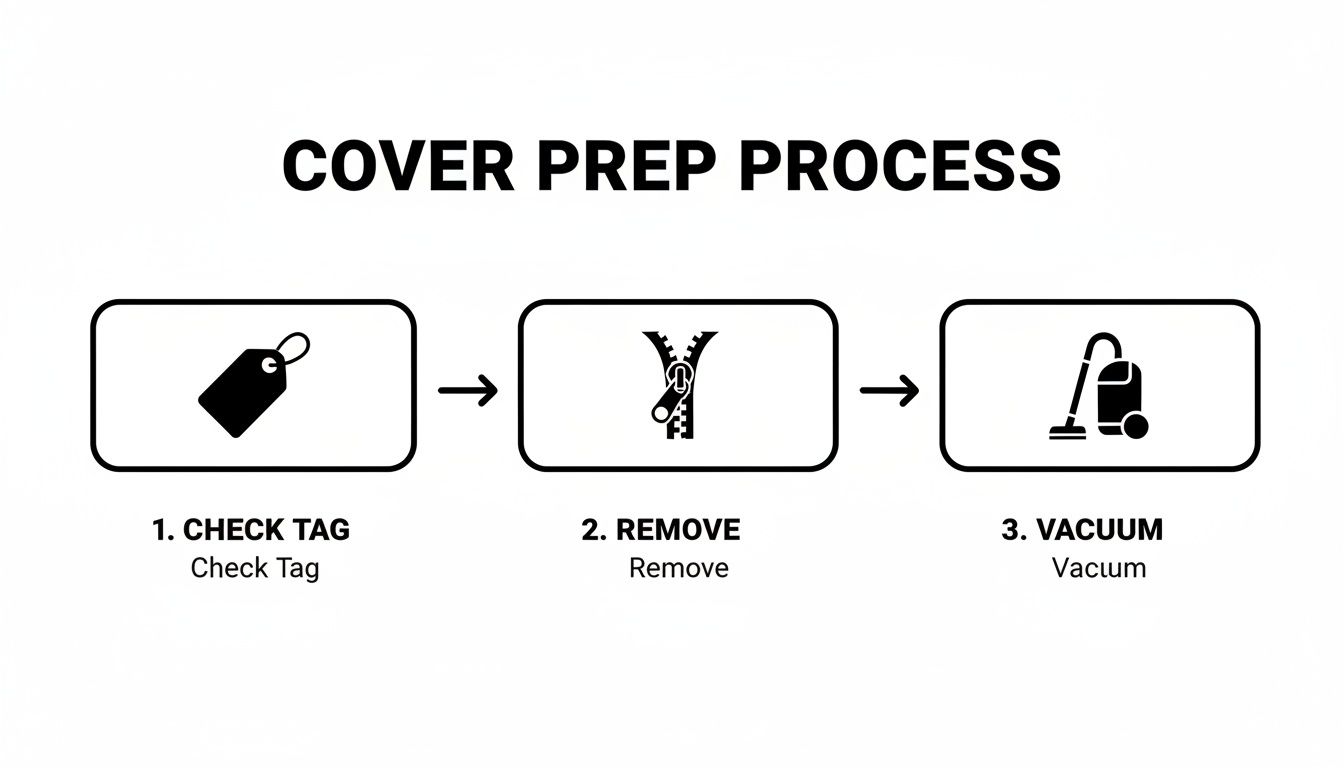
Checking the tag, removing the cover properly, and vacuuming sets you up for a perfect, damage-free wash every time.
A clean cover is fantastic, but it's only one piece of the puzzle. To get the most out of your entire bed, check out our complete guide: Mattress Maintenance Cleaning Tips to Extend Its Lifespan.
How to Remove Common Stains and Odors
Life happens. A morning coffee misses the nightstand, or a late-night snack doesn't quite make it. As a family that’s been helping Illinois homes stay beautiful since 1870, we know that most mishaps are easy to handle if you act fast.
The first rule of stain fighting is simple: blot, don’t rub. When you rub a fresh spill, you’re just grinding it deeper into the fabric. Grab a clean, dry cloth and press down firmly to lift as much liquid out as possible before it sets.
Targeted Treatments for Stains and Smells
Once you've blotted the worst of it, it's time to get specific.
For organic stains like sweat, coffee, or food, an enzyme cleaner is your best friend. These cleaners break down the proteins in the stain, lifting them from the fibers. A simple paste of mild detergent and cool water also works.
For musty or lingering odors, our family has always sworn by baking soda. It’s a natural deodorizer that works wonders. Sprinkle a light layer across the cover, let it sit for a few hours, then vacuum it all up with your upholstery attachment.
Interestingly, studies have shown that a simple 1:1 solution of white vinegar and water can effectively treat up to 92% of organic stains without harsh chemicals, as noted in these recent market findings.
We've always believed that a comfortable home shouldn't be complicated. Taking care of your mattress is one of those small acts that protects your investment and keeps your bedroom feeling like a true sanctuary.
Proper cleaning does more than just remove a spot; it freshens the air and helps keep allergens from building up. For more ideas on maintaining your sleep space, take a look at our guide on how to keep your mattress cool and clean all summer long.
Of course, a stubborn stain can be a sign that it’s time for a fresh start. If you’re ready to upgrade, our collection of high-quality mattresses is waiting for you online. With our flexible financing options, a better night’s sleep is always within reach.
Drying and Reassembling Your Mattress Cover Correctly
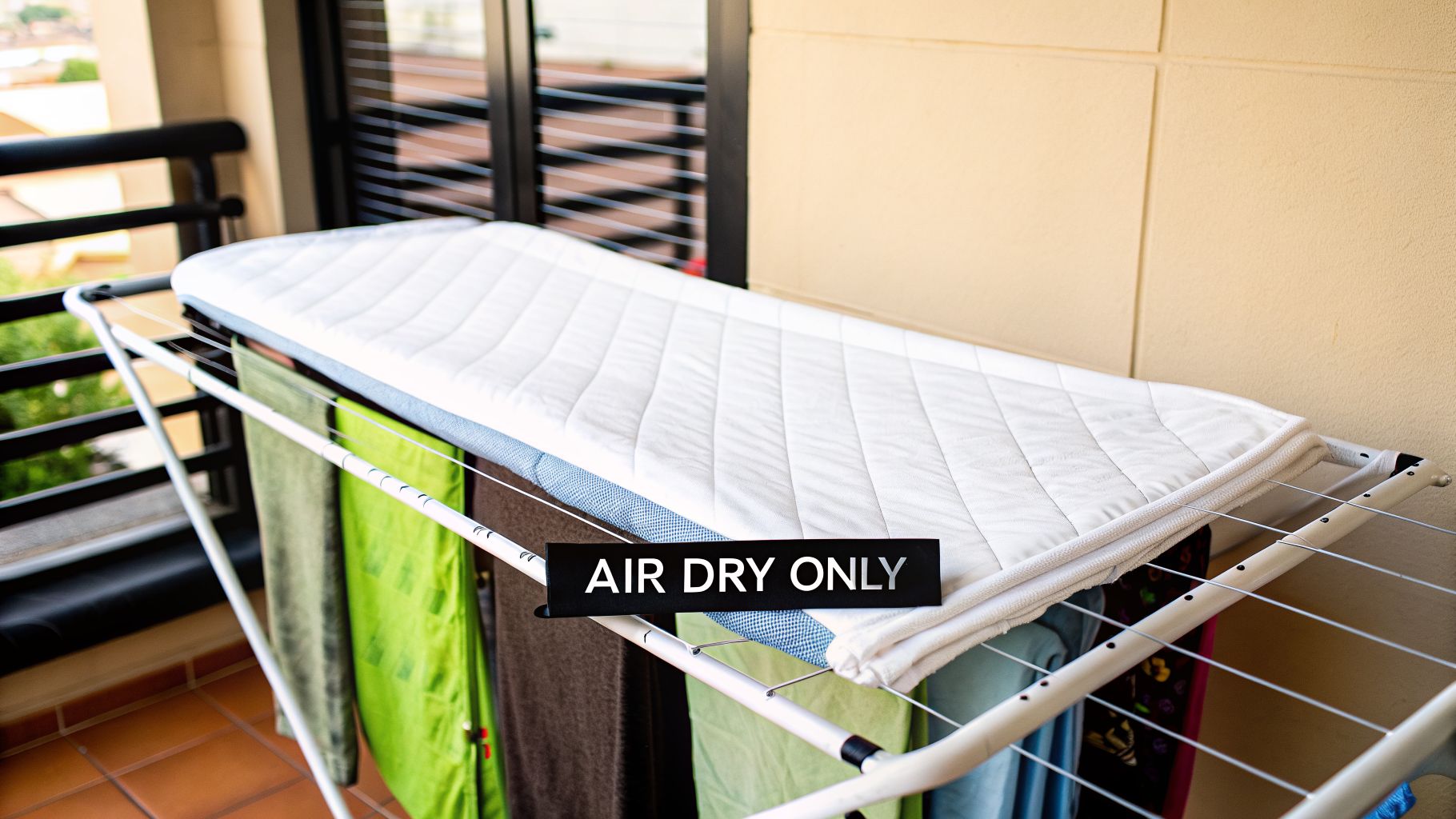
You've washed your mattress cover and it smells fresh and clean. But don't rush this final step. How you dry your cover is just as important as how you wash it.
I can't stress this enough: keep your cover away from the dryer's high-heat setting. That intense heat is the number one enemy of most mattress covers. It can shrink the fabric, melt delicate fibers, and make it impossible to get back onto your mattress.
Air-Drying: The Only Method You Should Use
Patience is your best friend here. The safest and most effective way to dry your cover is to air-dry it. This gentle approach protects the fabric and ensures it holds its original shape and size.
You’ve got a couple of great options for this.
Lay It Flat: Find a clean, dry surface, like a bed topped with fresh sheets, and lay the cover completely flat. This prevents the fabric from stretching while it dries.
Hang It Evenly: If you have a sturdy clothesline or a large drying rack, you can hang the cover. The trick is to distribute the weight evenly so it doesn't pull or warp. A room with good airflow is perfect.
While a little sun is a great natural disinfectant, avoid leaving it in direct sunlight for hours, as UV exposure can fade colors or weaken fibers. Your main goal is getting it 100% dry before it goes near your mattress—even a hint of moisture can invite mold and musty smells.
A simple cleaning routine can make a huge difference. Regular vacuuming helps manage dust mites, and a proper wash and air dry can kill up to 99% of bacteria. You can find more about mattress hygiene from industry analysts and see just how big an impact it makes.
Putting It All Back On Without a Fight
Getting a snug cover back onto a big mattress can feel like a wrestling match. Here's a trick we've learned over the years: ask for help if you can!
Start by lining up one corner of the cover with the corner of the mattress. Slowly work your way down one long side, gently pulling and smoothing the fabric. Repeat on the other side before zipping it up to prevent stress on the zipper.
It's a simple technique, but it works every time. When you're ready for a brand new mattress, we're here to make it simple. Browse our latest arrivals online and see how our complimentary design consultations can help you create the perfect sleep setup.
Extending Your Mattress Life and Knowing When to Upgrade
While keeping your cover clean is a great habit, the secret to a long-lasting mattress is playing defense. We've been in the furniture business since 1870, and we know quality is meant to last. That’s why we always recommend a high-quality, waterproof mattress protector as your best line of defense.
A protector is affordable insurance for your mattress. It shields your investment from spills and allergens, dramatically extending its lifespan while being easy to wash. This helps you avoid deep-set stains and preserves that new-mattress feeling for years.
Signs It Is Time for a New Mattress
But let's be realistic—sometimes a cover is past the point of rescue. If you're seeing these signs, it’s a clear signal that it might be time for an upgrade.
- Permanent Stains or Discoloration: You've tried every trick, but some stains won’t budge. More than an eyesore, they can become a breeding ground for bacteria.
- Tears, Rips, or a Broken Zipper: A damaged cover can no longer protect your mattress properly and is a hassle to get on and off.
- A Persistent Odor: A musty smell that lingers after washing could point to mildew deep within the cover's fibers or even in the mattress foam itself.
At Short Furniture, we believe a great night's sleep is an investment in your well-being. When it's time to replace your old mattress, we're here to make the process simple, supportive, and exciting.
From our Illinois showrooms to our online store, we offer a curated collection of mattresses built for lasting comfort. Finding your perfect match has never been easier. Browse our latest arrivals online, and remember our flexible financing and reliable delivery are designed to bring your dream bedroom to life.
Frequently Asked Questions About Mattress Care
With over 150 years in the furniture business, our family has heard every question imaginable about keeping a home looking and feeling its best. When it comes to mattress covers, a few questions pop up time and again.
Here are our honest, trustworthy answers to the most common queries we get about keeping your memory foam mattress cover in top shape.
How Often Should I Clean My Memory Foam Mattress Cover?
Life gets busy, but for good hygiene, we recommend a full wash every 2-3 months. Think of it as a seasonal reset for your bed.
Of course, that doesn't cover accidents. Spills should be spot-cleaned the moment they happen to stop them from becoming permanent. A quick vacuum once a month also works wonders for cutting down on dust and dander.
Can I Use Bleach on My Mattress Cover?
We get this one a lot, and the answer is always a firm no. Bleach is too aggressive. Its harsh chemicals will break down the delicate fibers of the cover and can seep through and cause permanent damage to the memory foam underneath.
Your mattress is an investment in your sleep, and that investment starts with gentle care. Always stick to a mild detergent, a simple diluted vinegar solution, or a dedicated enzyme cleaner for tough stains.
My Cover Shrank a Little. What Should I Do?
This is a classic "oops" moment, and it’s why we stress following the care label! If you have minor shrinkage, don't panic. You can often fix it by gently stretching the fabric while it's still damp.
The trick is to carefully work it back onto the mattress. As it finishes air-drying, the mattress acts as a form, helping the cover stretch back to its original shape. To prevent it from happening again, always use cold water and air-dry completely.