


Stylish Affordable Furniture for Small Spaces

A small home can feel like a puzzle at the end of a long day. Your coat lands on a dining chair. The coffee table does double duty as a desk. Overnight guests mean a scramble for sleeping space. If that sounds familiar, you’re not failing at decorating. You’re living in a space that needs furniture with a job to do.
That’s why affordable furniture for small spaces matters so much. The right pieces don’t just fill a room. They create breathing room, support daily routines, and make a compact home feel calm instead of crowded.
People often assume a smaller room means settling for less. In practice, it means choosing better. A narrow console can replace a bulky media unit. A storage bed can eliminate extra bedroom pieces. A compact dining table can still host dinner without taking over the room.
For families, renters, first-time homeowners, and empty nesters alike, small-space design works best when it feels practical first and stylish second. Happily, those two things can live together.
Welcome Home to Smart Small-Space Living
A reader once described her apartment this way: “I have enough room for my life, but not enough room for my furniture.” That’s the heart of the problem. Individuals often aren't accumulating excessive belongings. Rather, their furniture selections occupy disproportionate amounts of space.
A loveseat that’s too deep can block a walkway. A bed without storage can force in an extra dresser. A dining set with wide chair backs can make a breakfast nook feel pinched before anyone even sits down.
Small-space living gets easier when you stop asking, “Will this fit?” and start asking, “Will this help?” Those are two very different questions.
Why small spaces need smarter choices
A compact home usually needs furniture to solve more than one problem at a time. Seating may need to host guests. A bedroom may need hidden storage. A living room may need to work as a lounge, office, and dining area in the same week.
That sounds complicated, but the solution is usually simple:
- Choose fewer, better pieces that serve a clear purpose.
- Favor open visual lines so the room feels lighter.
- Use vertical space well instead of overfilling the floor.
- Buy for your routine instead of buying for a showroom look.
Small rooms rarely need tiny furniture everywhere. They need the right scale, the right shape, and the right function.
What affordable really means
Affordable doesn’t mean flimsy. It means buying with intention.
Sometimes the best value is a compact sectional that defines a room and lasts. Sometimes it’s a nesting table set that can spread out when company arrives and tuck away when you want the floor back. Sometimes it’s choosing a mattress and bed that improve sleep without demanding extra furniture around them.
If you’ve felt overwhelmed trying to sort through online options, you’re not alone. Small-space shopping gets confusing fast because every inch matters. The good news is that once you understand how to measure, prioritize, and arrange a room, the choices become much clearer.
Measure Your Space for a Perfect Furniture Fit
Designers don’t start with color. They start with measurements. It's like tailoring a suit. Even a beautiful fabric won’t work if the fit is wrong.
The same goes for furniture. In a small room, a few missed inches can turn a smart purchase into a daily annoyance. A sofa may fit the wall but block a door swing. A nightstand may fit beside the bed but prevent a drawer from opening fully.

Measure the room like a pro
Start with a basic sketch of the room. It doesn’t need to be fancy. A simple outline on paper works perfectly.
Then record these details:
- Wall lengths so you know your maximum footprint.
- Door swings because open doors claim more space than anticipated.
- Window placement so tall headboards, bookcases, and media pieces don’t interfere.
- Outlet and vent locations so furniture doesn’t block what you need to use.
- Baseboards and trim because they affect how flush a piece can sit against the wall.
- Ceiling height to help you use vertical storage wisely.
Don’t stop at width and depth
Shoppers often get tripped up when they measure the empty floor and forget the room still has to function after the furniture arrives.
Check these clearances before you buy:
| Area to check | Why it matters |
|---|---|
| Walkways | You need room to move naturally around the piece |
| Drawer clearance | Dressers, storage beds, and consoles need opening space |
| Reclining or sleeper function | Moving parts need extra depth in front or behind |
| Table and chair pull-out space | Dining furniture must work when in use, not just when tucked in |
| Entry path | The piece has to make it through doors, halls, and stairs |
A good rule is to test the layout with painter’s tape on the floor. Tape out the exact footprint of the sofa, bed, or dining table. Then walk around it.
Practical rule: If a taped layout already feels tight before the furniture is in the room, the real piece won’t feel better.
Pay attention to visual weight
A room can be physically crowded or visually crowded. They’re not always the same.
Research into small-space design found that multifunctional pieces can reduce the required floor footprint by 40 to 60 percent compared to single-purpose alternatives, and furniture with raised legs of 4 to 6 inches can create the illusion of 15 to 25 percent more usable floor area by keeping sight lines open, according to this small-space furniture design guide.
That’s why a slim sofa on legs often feels lighter than a heavy skirted one, even if the measurements are close. It’s also why open-base nightstands, leggy accent chairs, and media consoles on legs work so well in compact homes.
A simple measuring checklist
Before you shop, make sure you have:
- Room dimensions
- Entry dimensions
- Maximum piece size
- Required clearances
- A rough furniture plan
- A note of what must stay in the room
If you want a deeper walkthrough, this guide on how to measure furniture is a helpful next step.
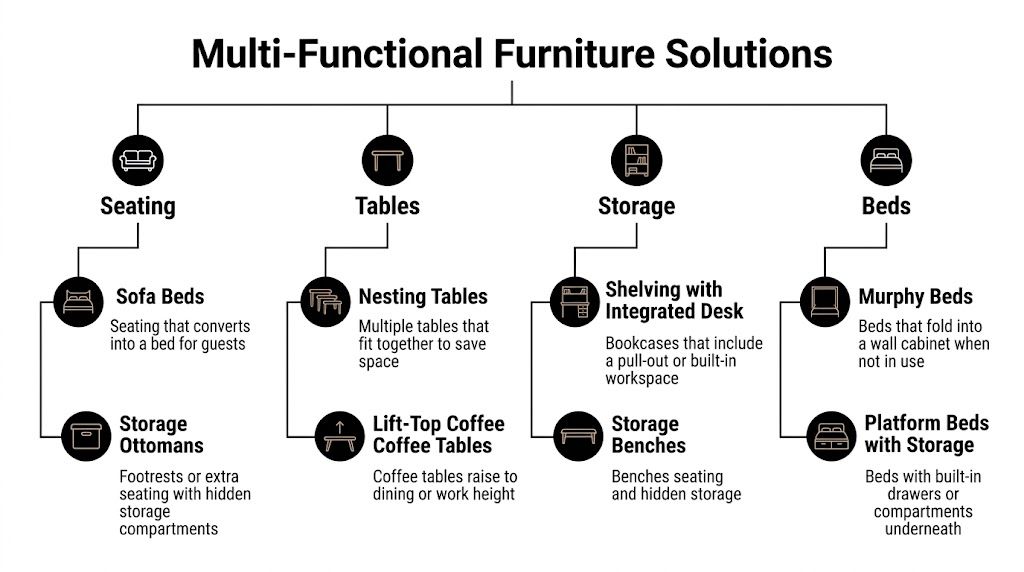
Discover Multi-Functional Furniture That Works Harder
In a small home, the best furniture earns its place. It doesn’t just look good for a photo. It supports the way you live every day.
That practical shift is already shaping the market. Multi-functional furniture designs command over 45% of the small space furniture market share, driven by demand for pieces like modular sofa beds, foldable tables, and storage ottomans, according to this small space furniture market report.
Sleeper sofas for guest-ready living rooms
A sleeper sofa solves one of the biggest small-home challenges. Where does everyone sleep when there’s no guest room?
This piece lets the living room stay a living room most of the time. Then it becomes a bedroom when needed. That’s especially useful in apartments, finished basements, and homes where one room has to stay flexible.
Look for:
- A clean arm profile so the sofa doesn’t eat up width.
- A comfortable seat depth for everyday lounging.
- An easy-open mechanism that won’t turn overnight guests into a project.
- Upholstery that handles real life, especially if the sofa is your main seating.
If you host often, shop the collection with comfort in mind first. A sleeper that’s miserable to sit on won’t feel affordable for long.
Storage beds that cut bedroom clutter
Bedrooms get crowded quickly because they often carry hidden jobs. Clothes storage. Linen storage. Charging station. Reading nook. Sometimes even workspace.
A storage bed helps by moving some of that burden under the mattress. Drawers in the base can take the place of extra bedroom furniture, especially in rooms where a tall chest fits better than a wide dresser, or where there’s no room for both.
This works especially well for:
- Kids’ rooms with limited closet space
- Guest rooms that also store seasonal bedding
- Primary bedrooms where floor space is tight
- Studio apartments where every item must justify itself
A storage bed can also make the room look cleaner because fewer standalone pieces compete for attention.
Nesting tables and lift-top styles for adaptable living
Traditional end tables and coffee tables can be stubborn. They sit in one spot and ask the whole room to adjust around them.
Nesting tables behave differently. You can spread them out when people visit, then tuck them together when you need more open floor. Lift-top coffee tables do something similar by changing height and function. One piece can support drinks, work, casual meals, or game night.
That kind of flexibility matters more than people expect. In compact homes, the furniture that moves with you tends to be the furniture you keep longest.
A small room feels more generous when surfaces can expand only when you need them.
Modular sectionals that define the room
Many shoppers assume sectionals are only for large family rooms. That’s not always true.
A modular sectional can help a smaller open-concept room because it defines the living zone without needing several separate seats. In a studio or combined living-dining area, that clear boundary makes the room feel organized.
A few things matter here:
- Choose a scaled-down frame, not an overstuffed style.
- Keep the arms slim if square footage is limited.
- Use one sectional instead of a sofa plus extra chairs if the seating plan works better that way.
In a narrow room, a compact sectional with a chaise can sometimes replace both a sofa and an ottoman. That’s a smart trade.
Drop-leaf and compact dining tables for real meals
Dining space is often the first thing people give up in a small home. They settle for eating at the counter or on the sofa because a full-size table feels impossible.
But compact dining furniture has come a long way. Drop-leaf tables, round pedestal tables, and counter-height pieces can support daily meals without dominating the room. The key is buying for your actual routine.
If you usually dine as a household of two but host occasionally, a table that expands for company makes more sense than one that stays large all year.
Small heroes worth watching
Some of the most useful pieces don’t get enough credit.
- Storage ottomans add hidden storage and can double as seating.
- Benches can work at dining tables, entryways, or the foot of the bed.
- Bookcases with integrated desk space support work-from-home setups.
- Wall-friendly consoles create landing space without bulk.
If you’re trying to decide which category fits your home best, this guide to multifunctional home office furniture can spark ideas that carry beyond the office.
Create Your Affordable Furniture Budget with Confidence
The struggle isn’t due to an inability to set a budget. Rather, it’s not knowing where to spend and where to save.
That’s the difference between cheap and affordable. Cheap usually focuses on the ticket price. Affordable looks at usefulness, durability, and whether the piece keeps solving the problem a year from now.
Start with the room pressure points
Ask yourself which piece would improve the room most right away.
In many small homes, that’s one of these:
- A better sofa because the living room does everything
- A storage bed because the bedroom lacks built-in storage
- A dining table with flexibility because the current one wastes space
- A mattress upgrade because better sleep matters more than another accent piece
Once you know the pressure point, put more of the budget there. Decorative extras can come later.
Think in value, not just price tags
The wider market shows how strongly shoppers are looking for budget-friendly versatility. The global small space furniture market was valued at USD 23.4 billion in 2023 and is projected to reach USD 41.2 billion by 2032, with over 45% of sales stemming from multi-functional items, according to DataIntelo’s small space furniture market report.
That doesn’t mean every low-priced piece is a wise buy. It means people are actively looking for furniture that does more for the money.
A practical budget often looks like this:
| Budget priority | What to look for |
|---|---|
| High priority | Bed, mattress, main sofa, dining table you’ll use often |
| Medium priority | Storage pieces, accent seating, media furniture |
| Flexible priority | Rugs, lamps, occasional tables, decorative extras |
A simple way to allocate your budget
Try this sequence instead of shopping randomly.
List what the room must do
Sleep, work, eat, store, host, relax.
Match one furniture piece to each need
If one piece can handle two needs, even better.
Buy the hardest-working item first
That’s usually where comfort and quality matter most.
Leave room for delivery and setup
The sticker price isn’t the whole picture.
Use financing when it helps you buy the right piece once
Spreading payments can make a durable choice more reachable than settling for a replacement cycle.
Good budgeting isn’t about buying the lowest price in the room. It’s about avoiding purchases you’ll regret, replace, or stop using.
If you want a clearer look at why furniture pricing can vary so much, why furniture is so expensive offers useful context.
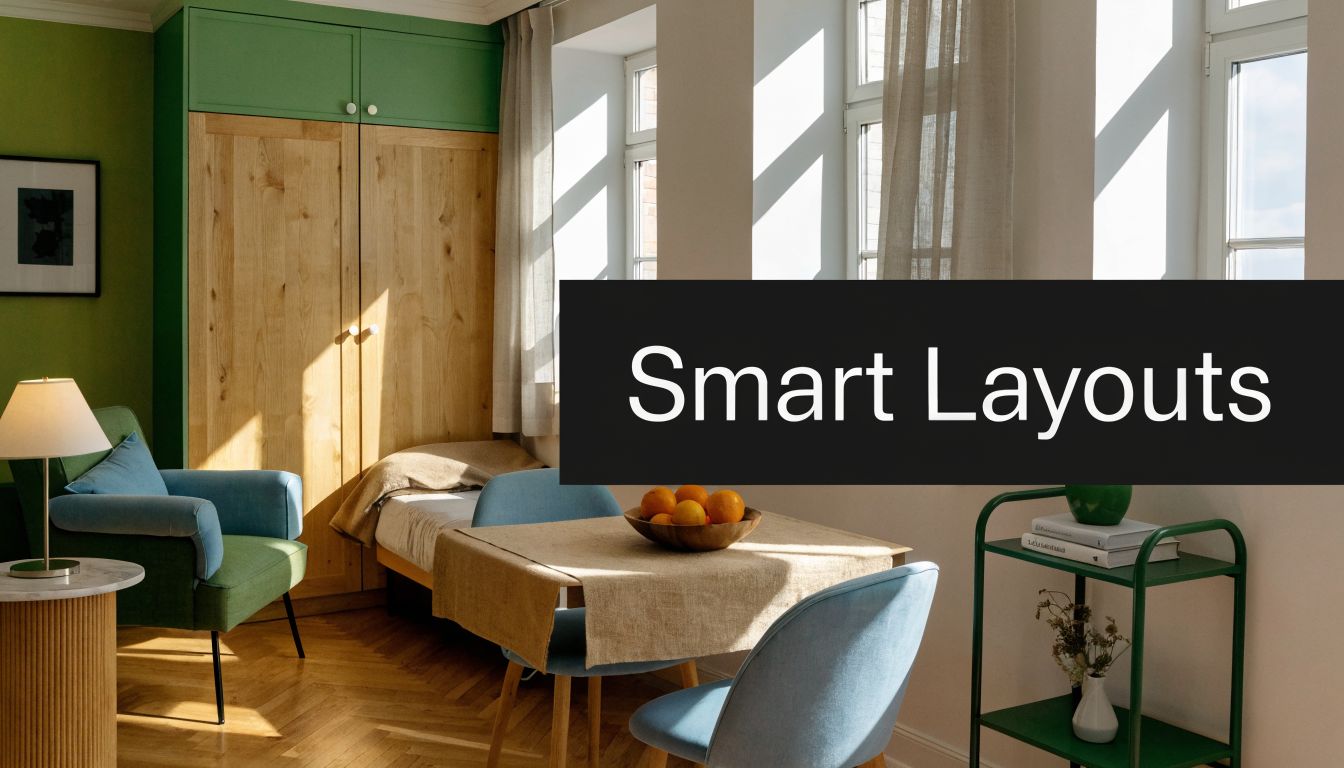
Inspiring Layout Ideas for Common Small Rooms
A room can have good furniture and still feel awkward. Layout is what turns separate pieces into a home that works.
The easiest way to understand this is to look at real room types. Most small homes run into the same three layout problems again and again.
The compact living room that still needs to host
In a smaller living room, people often push every piece against the wall and hope the center stays open. Sometimes that works. Sometimes it just leaves the room feeling disconnected.
A better plan is to anchor the seating area with intention.
Try this arrangement:
- Place a compact sofa or apartment-size sectional on the longest wall.
- Use nesting tables instead of a heavy coffee table.
- Choose one accent chair with open arms or exposed legs rather than two bulky chairs.
- Add a narrow media console that doesn’t project too far into the room.
- Use a floor lamp instead of a side table lamp if tabletops are limited.
This layout keeps the room social without choking the walkway. If the room also serves as an occasional guest area, swap the sofa for a sleeper model and keep the surrounding pieces light and movable.
The long narrow bedroom that feels crowded fast
Bedrooms with limited width often frustrate people because every piece seems to compete with the bed.
In this room, let the bed stay the star, but change what surrounds it. A storage bed can reduce the need for extra case goods. Slim nightstands or wall-mounted shelves can replace chunkier bedside furniture. A tall chest or narrow wardrobe uses vertical space better than a wide low dresser.
A smart arrangement might look like this:
| Furniture choice | Why it helps |
|---|---|
| Storage bed | Handles hidden clothing or linen storage |
| Tall narrow chest | Uses height instead of floor width |
| One bench or none at all | Keeps the foot of the bed from feeling blocked |
| Lightweight side tables | Maintains visual openness |
If the room has one long blank wall, resist filling it with several small pieces. One well-scaled dresser often looks calmer than a string of mismatched storage.
The studio that has to do everything
Studio apartments ask the most from furniture. Sleeping, lounging, working, dining, and storage all happen in one open area.
The mistake here is trying to mimic a larger home room by room. Instead, think in zones.
One effective setup uses:
- A modular sectional or compact sofa to define the living area
- A lift-top or small coffee table for flexible use
- A bookcase or open shelving as a soft divider
- A drop-leaf dining table near the kitchen edge
- A bed with integrated storage to reduce extra furniture
The trick is to let one area suggest the next without building visual walls everywhere. Rugs can help. So can lighting. A floor lamp at the sofa and a hanging light or table lamp at the dining zone make each area feel intentional.
When a studio feels chaotic, it’s usually because every function is visible at once. Layout solves that by giving each activity a clear home.
The multipurpose guest room and office
This room type shows up in many Illinois homes. It’s a spare bedroom, but it’s also the office, the hobby room, and the holiday overflow zone.
The winning combination is usually a desk with a small footprint, a sleeper sofa or daybed, and vertical storage. Keep the center of the room open so the space doesn’t feel like a storage closet with a chair in it.
Use enclosed storage where possible. Open shelving is useful, but too much visible clutter makes a small room feel busier than it is.
For more arrangement inspiration, these living room arrangement ideas can help you translate principles into real layouts.
Styling Tricks and Maintenance for Lasting Beauty
Small rooms respond quickly to small changes. You don’t need a dramatic makeover to make them feel brighter, calmer, or more polished.
The best styling tricks work because they support what the furniture is already doing. They don’t fight the room. They reinforce it.

Styling moves that make a room feel larger
You can make a compact room feel more open with a few dependable choices.
- Use mirrors thoughtfully to bounce light and create depth.
- Choose lighter textiles if the room already feels visually heavy.
- Hang curtains higher so the eye travels upward.
- Repeat one or two finishes instead of mixing too many wood tones and metals.
- Keep tabletops partly clear so surfaces can breathe.
One large piece of art usually works better than many tiny items on a wall. In a small space, visual clutter adds up fast.
Let vertical lines help you
Floor lamps, tall bookcases, and tall headboards can draw the eye up. That creates a sense of height and order.
This doesn’t mean every piece should be tall. It means the room needs some vertical rhythm so everything doesn’t sit low and crowded across the floor.
A simple formula works well:
- One taller element
- One medium visual anchor
- A few lower supporting pieces
That mix feels balanced and keeps the room from looking flat.
Care habits that protect your investment
Affordable furniture for small spaces should still last. A few care routines make a real difference.
For wood furniture:
- Dust with a soft cloth instead of abrasive paper towels.
- Wipe spills quickly so moisture doesn’t linger on the finish.
- Use coasters and felt pads to prevent rings and scratches.
- Keep pieces out of harsh direct sun when possible.
For upholstered furniture:
- Vacuum creases and cushions regularly
- Rotate seat cushions if the design allows
- Blot spills, don’t scrub
- Follow the fabric care code before using any cleaner
A room feels more expensive when the furniture is clean, cared for, and edited well. Styling helps, but maintenance is what keeps the look.
Keep the room from filling back up
This is the quiet challenge of small-space living. Even a beautifully furnished room can slowly lose function if every flat surface becomes storage.
Try one habit that designers use all the time. Leave a little empty space on purpose. An open corner, a partly clear console, or breathing room beside a chair tells the eye the room isn’t overloaded.
That empty space isn’t wasted. It’s what makes the room feel livable.
Why Illinois Has Trusted Short Furniture Since 1870
Buying furniture online can feel convenient right up until the hidden parts show up. Delivery charges. Long waits. Boxes that require hours of assembly. Returns that become a project because the scale or color wasn’t right in the room.
That’s especially frustrating when you’re furnishing a small home, because precision matters more. One wrong purchase doesn’t just look off. It disrupts the whole layout.
The hidden costs many shoppers run into
The glossy side of e-commerce gets plenty of attention. The logistics side doesn’t.
A 2026 analysis found that 45% of Midwest buyers abandon online carts because of unanticipated shipping fees averaging $100+ for bulky items, according to this report summary discussing hidden delivery costs for furniture shoppers. For Illinois shoppers, that concern is very real. A low price can stop feeling affordable once delivery and hassle are added back in.
That’s one reason local trust still matters.
Why local experience still wins
A family-owned furniture store with deep roots brings something big national sites often can’t. Context.
That means understanding regional homes, practical budgets, real delivery expectations, and the fact that shoppers don’t want to gamble on whether a sectional can make the turn into the living room. It also means helping people compare living room sets, dining tables, mattresses, storage beds, and accent pieces with a more informed eye.
There’s comfort in knowing a business has served Illinois families across generations. Heritage doesn’t replace good service. It proves it has been repeated.
What shoppers often value most
When people furnish a smaller home, they usually want the same core things:
- Reliable delivery so the purchase feels straightforward
- Flexible financing options so they can buy the right piece without waiting
- Complimentary design consultations so measurements and layouts make sense before checkout
- A broad online selection that still connects to real local service
- Confidence in durability because replacing mistakes gets expensive fast
That combination is hard to fake. It comes from experience and follow-through.
If you’re comparing affordable furniture for small spaces, remember that the final price is only one part of the story. Delivery, fit, quality, and service shape the experience just as much as the item itself.
Browse Short Furniture for affordable furniture for small spaces, including living room sets, dining tables, mattresses, storage beds, and versatile pieces designed for everyday life. Shop the collection online, browse the latest arrivals, apply for financing today, or schedule a complimentary design consultation to get expert help with layout, fit, and style. If you’re in Illinois, visit the showrooms in Litchfield or Shelbyville and experience reliable delivery and trusted family-owned service that’s been welcoming customers since 1870.